
Dankyi Mensah
In Living Colour: Dankyi Mensah and the Beauty of Being Seen
There is something immediately arresting about the people in Dankyi Mensah’s paintings.
They do not simply appear before us. They hold our gaze.
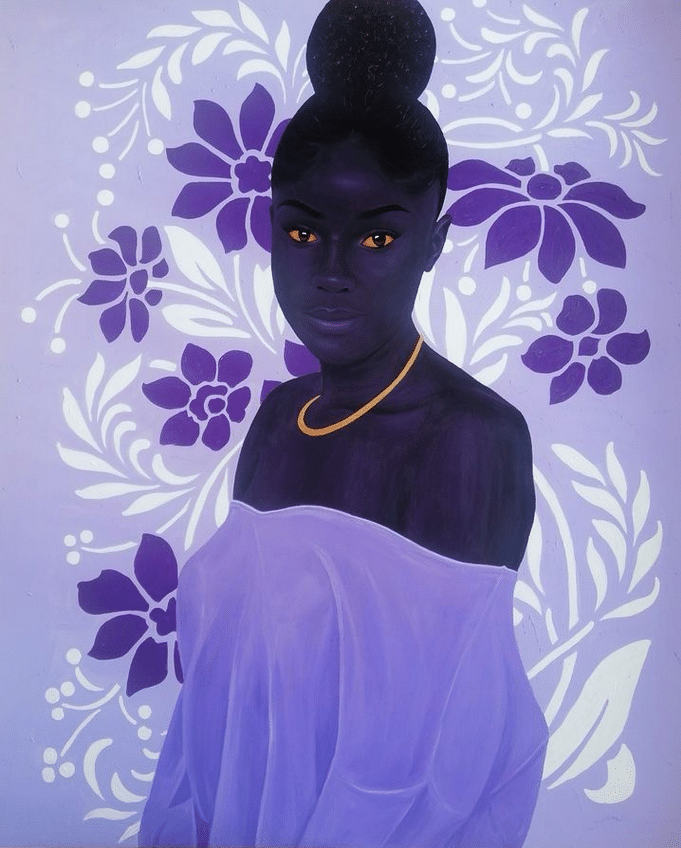
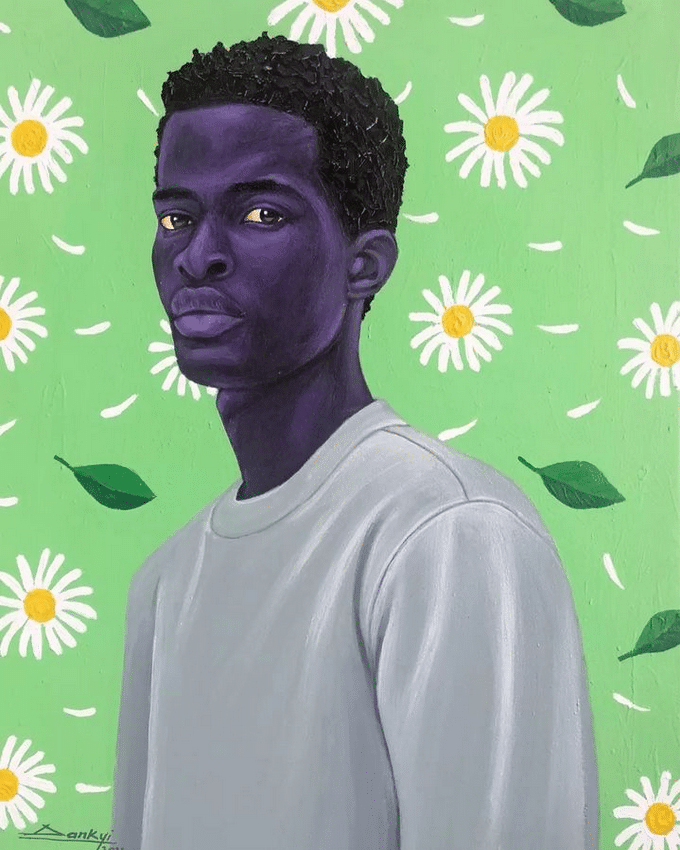
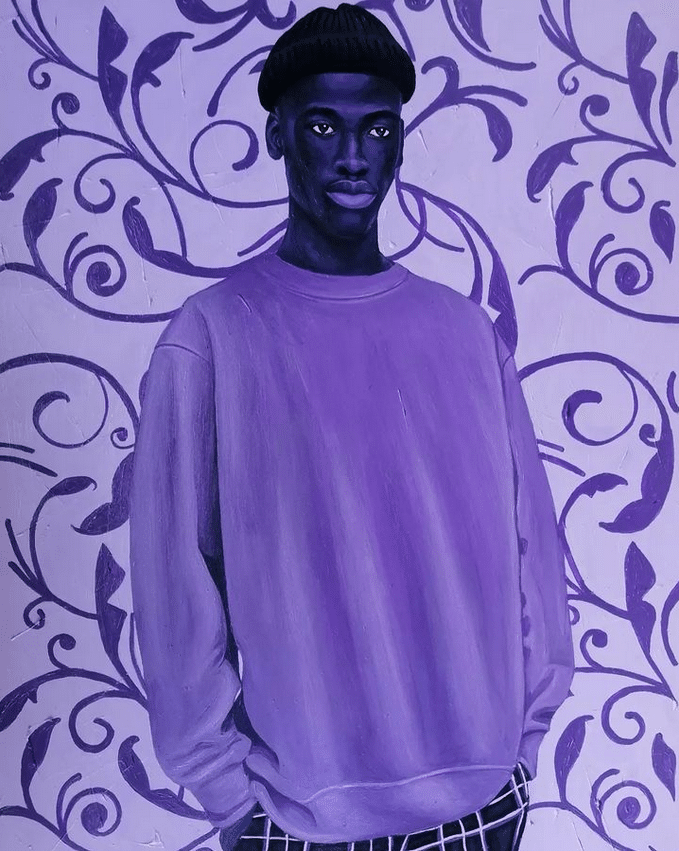
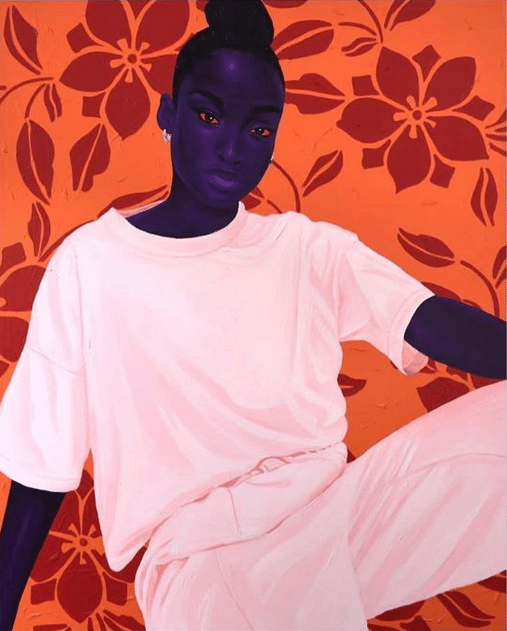
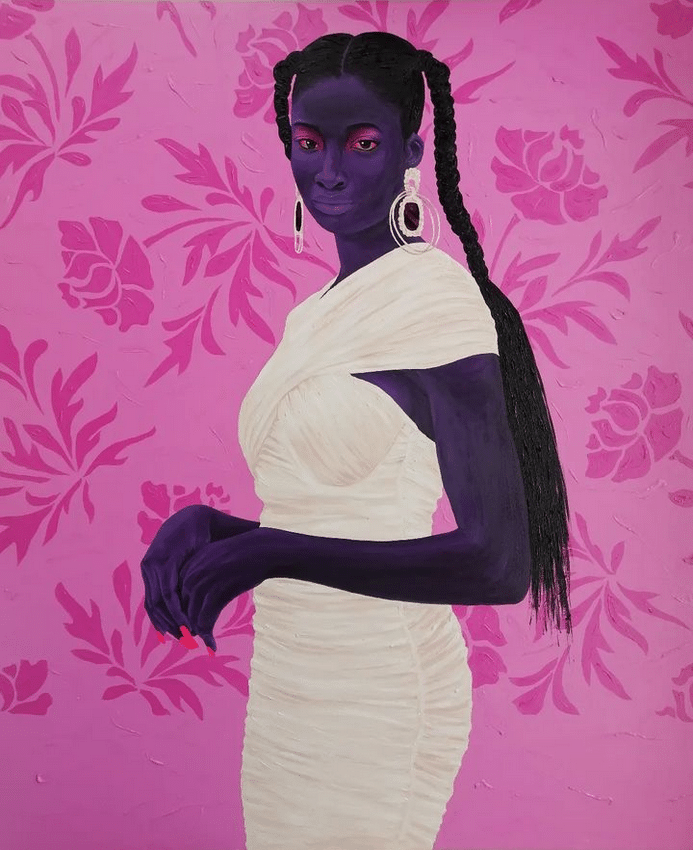
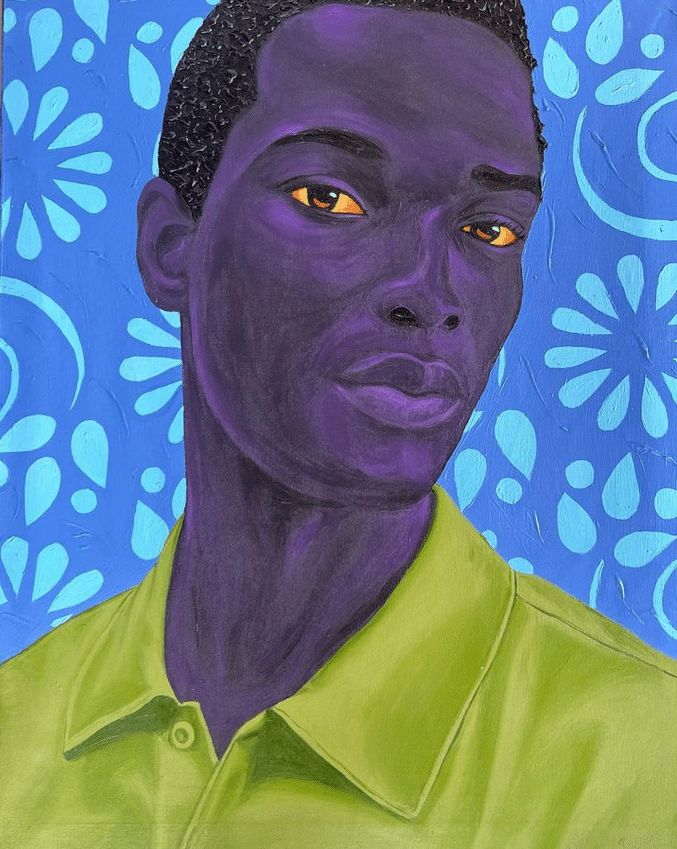
Rendered in deep violets, indigos and blues, against backgrounds bursting with flowers, patterns and electric colour, Mensah’s figures possess a presence that feels at once intimate and monumental. Some meet the viewer with quiet confidence. Others seem caught in private thought. There is elegance, vulnerability, pride and defiance in them—but above all, there is life.
For the Ghanaian artist, portraiture becomes more than the representation of a face or a body. It is a way of looking at contemporary African life and asking what it means to be seen on one’s own terms.
A Language of His Own
Born in Accra, Ghana, Dankyi Mensah completed his formal art education at the Ghanatta College of Art and Design in 2001. Since 2003, his work has been exhibited in Ghana and internationally, including exhibitions such as Kumerican Flowers, Since 1957, Reflecting Our Heritage, Culture in Confluence and A Tale of Two City.
Over the years, he has developed an instantly recognizable visual language.
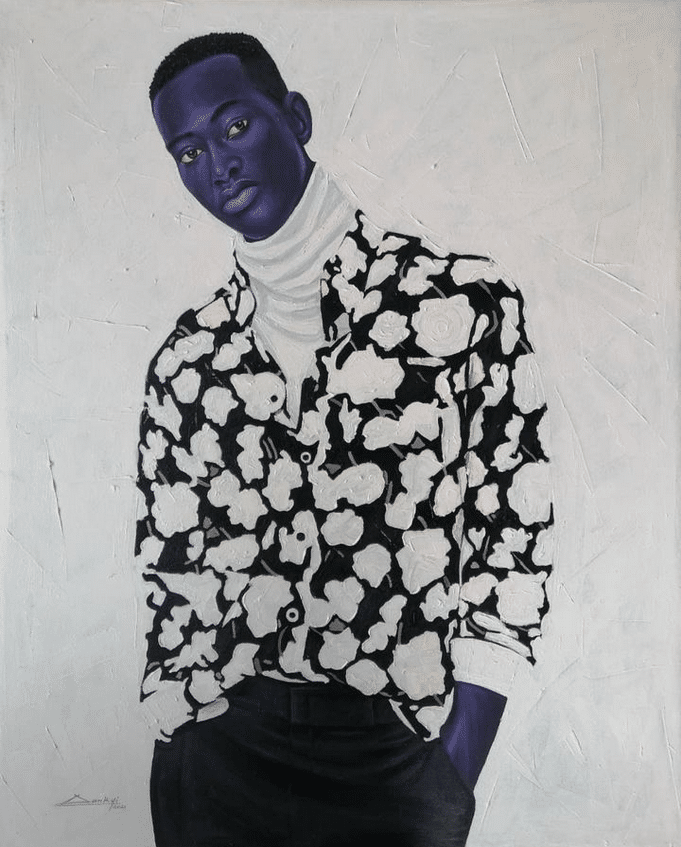
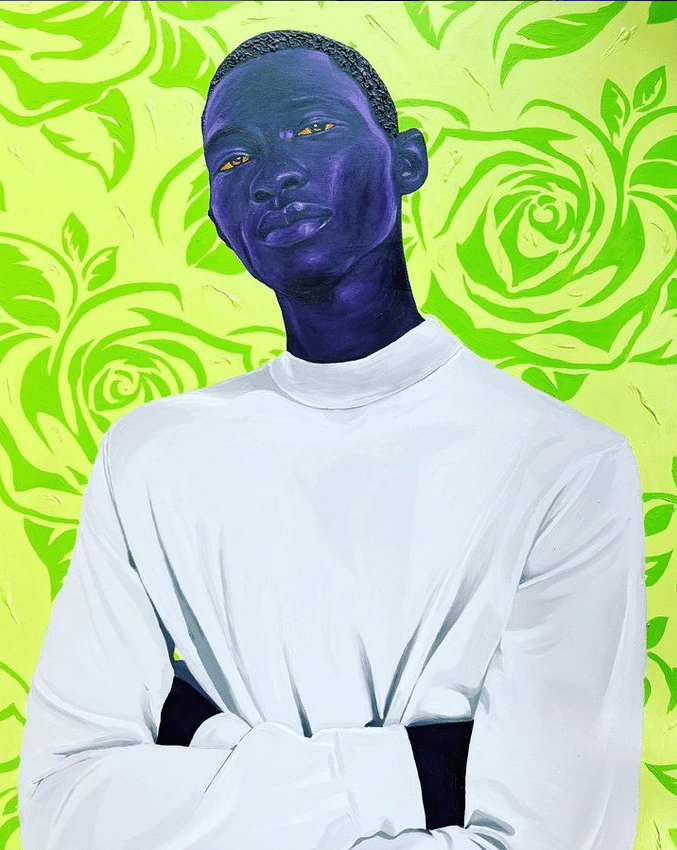
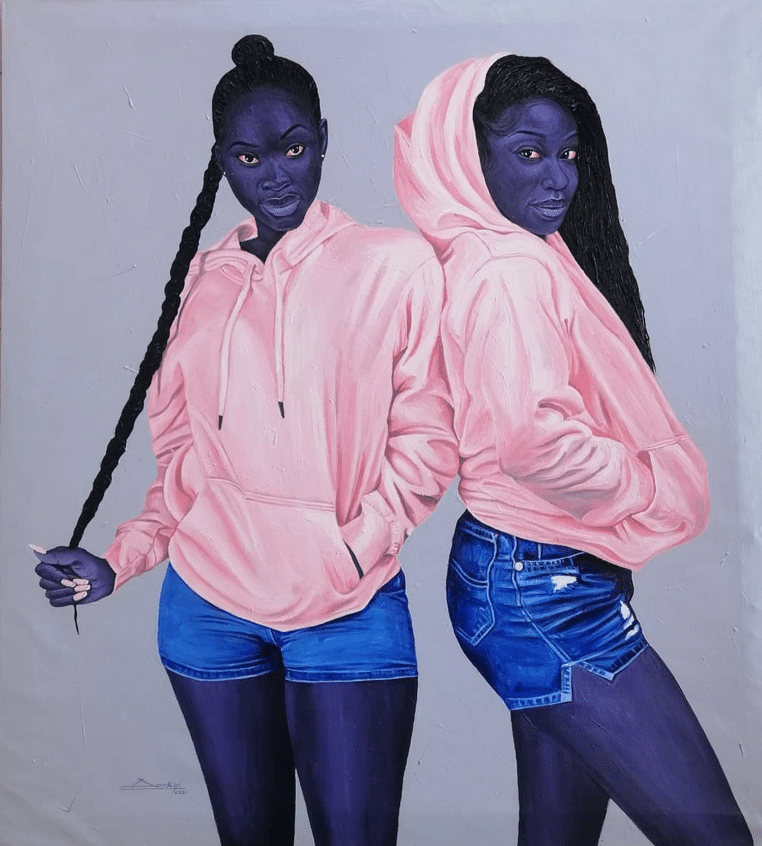
Skin becomes purple, midnight blue and violet. Eyes glow against dark complexions. Clothing appears in luminous whites, greens, pinks and greys, while flowers and ornamental patterns spread across intensely coloured backgrounds.
Yet this departure from naturalistic skin tones does not distance his subjects from reality. It seems to bring them closer.
By freeing Black skin from the expectation that it must be represented literally, Mensah allows colour to become expressive rather than descriptive. Purple can carry dignity, mystery, tenderness or strength; blue can deepen a face rather than distance it. Blackness remains unmistakably present, but its visual possibilities are expanded.
The Beauty of Presence
This is perhaps where the power of his portraits lies.
Mensah often positions his figures so that they look directly toward us, creating an encounter rather than a passive viewing experience. They seem aware of being observed. In turn, we become conscious of our own act of looking.
Even when little appears to be happening, something is unfolding psychologically.
And beneath the seductive colour and decorative surfaces lie more complicated questions about contemporary life. Mensah’s figurative practice reflects Ghana’s changing urban and social landscape, balancing moments of joy and aspiration with the pressures of livelihood, social expectations and the search for a dignified existence.
The brightness of his backgrounds can contrast with the seriousness or introspection of the people who inhabit them. Abundance and vitality coexist with uncertainty; confidence does not preclude vulnerability.
Mensah gives us beauty without pretending that beauty eliminates complexity.
Perhaps that is why his people feel so alive: they are allowed to contain contradictions.
Kumasi Meets America
That relationship between identity and transformation becomes especially compelling in Mensah’s Kumerica series.
The series draws from Kumerica, a cultural movement associated with Kumasi, in Ghana’s Ashanti Region, shaped by the meeting of local Ghanaian culture and influences from American urban culture.
Fashion, posture, hairstyles and attitude become signs of a generation constructing identity from multiple worlds at once. Mensah’s figures can feel unmistakably Ghanaian while participating in a visual language that travels far beyond Ghana.
But Kumerica is not simply about imitation. It is about taking influences from elsewhere and making them one’s own. The result is neither purely local nor simply imported; it belongs to the people who have transformed those influences through their own experience.
Contemporary clothing sits against exuberant floral backgrounds; streetwear meets carefully composed portraiture; individual style becomes almost ceremonial. Mensah captures a culture in motion rather than freezing it into a fixed idea of what African identity should look like.
Africa here is not positioned between “tradition” and “modernity” as though one must replace the other. It is already modern, already connected, already inventing new ways of expressing itself.
Humanity, in African Colour
There is a quiet challenge running through Dankyi Mensah’s work: who gets to define beauty?
His answer does not need to be declared.
He paints it.
Again and again, Black figures occupy the centre of the canvas. Their skin becomes violet, cobalt and indigo. They are elegant without needing to conform to inherited standards of elegance. They are beautiful without requiring translation.
Mensah does not merely paint Black beauty. He gives himself the freedom to reinvent its colours.
And perhaps that is the lasting power of his paintings. They invite us into a world saturated with colour, but what stays with us are the people.
Their gaze.
Their presence.
Their extraordinary right simply to be seen.
Bring Dankyi Mensah’s extraordinary world of colour into your own by acquiring one of his remarkable works here.
Follow him at: https://www.instagram.com/dankyimensah/
Location: Accra (Ghana)