
Siêsi Nems
Resurrecting Values, Revealing Beauty: The World of Siêsi Nems
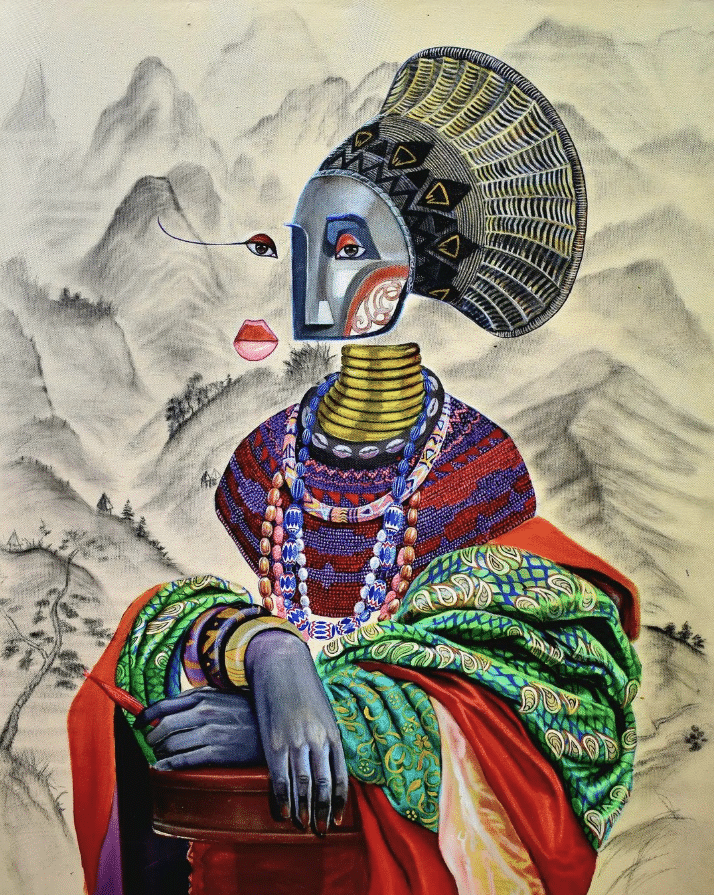
There was something immediately arresting about Siêsi Nems’ work when I first encountered it. The finesse, the originality, the beauty—but also the mystery. His figures seemed to belong simultaneously to the human world and somewhere beyond it: bodies transformed by geometry, eyes and mouths displaced or multiplied, familiar anatomy reimagined through an intensely personal visual language.
Meeting Siêsi by video call allowed me to discover what lies behind those enigmatic images. Our conversation revealed an artist whose practice has grown from childhood instinct into a much broader exploration of nature, ancestry, cultural memory, beauty, and our responsibility toward what we inherit.
Between drawing and dance
As a child in Cameroon, Siêsi divided his creative energy between two passions: drawing and break dancing. Both offered him an escape—a space in which he could create his own world and experience a sense of freedom and fulfilment.
As he grew older, art gradually took on a greater place in his life, and his talent became increasingly apparent to those around him. A decisive encounter came in 2005, when he met painter Merlin Nitcheu Monkam, who trained him in the use of coloured pencils.
The possibility of becoming an artist began to take shape.
Yet Siêsi was also acutely aware of the social reality surrounding that choice. In the environment in which he grew up, pursuing art professionally was not necessarily regarded as a viable path and could even be perceived as a sign of failure. Rather than abandoning his ambition, he took a pragmatic detour, completing two years of vocational training in sales and marketing at the Institut Universitaire du Golfe de Guinée.
The artist, however, never disappeared.
Learning everywhere
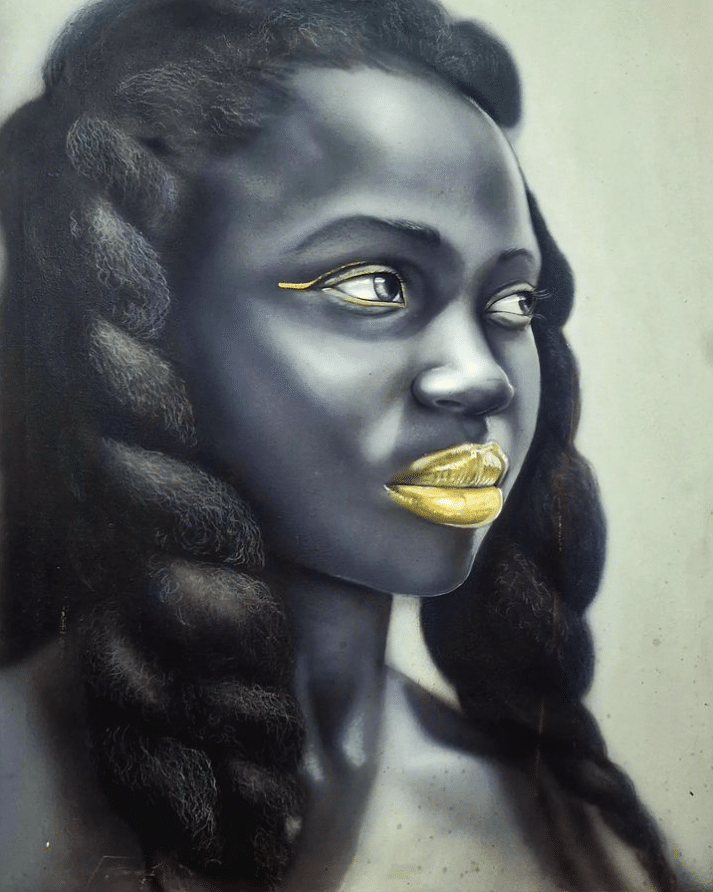
Siêsi continued practising with remarkable discipline while seeking opportunities to broaden his skills. His path led him through a succession of collaborations and creative environments, including the studio of the late graffiti artist Meric, where he worked as an airbrush artist and immersed himself in street art, automotive customization and mural painting.
He also participated in diverse artistic projects involving national and international NGOs.
These experiences gave him something different from a conventional artistic education: direct contact with multiple techniques, surfaces, audiences, and ways of making art.
Eventually, however, Siêsi decided to formalize the path he had been building for years. He enrolled in Visual Arts and Art History at the University of Yaoundé.
It was there, he told me, that he developed a deeper understanding not only of making art, but of art itself and its history. He trained, became an instructor, and eventually served as president of the Art Club. His role expanded beyond his own practice into artistic promotion and cultural organization, notably through the creation of the successful arts festival 237 Five Colors.
The childhood passion had become a vocation.
A language of his own
Today, Siêsi is a full-time artist whose work draws deeply from Cameroonian society and his Bamiléké heritage. At its core is the relationship between humanity, nature and ancestral knowledge—an intelligence transmitted across generations through art, craftsmanship, adornment, architecture and spiritual practices. He also pays tribute to the known and lesser-known figures who have contributed to the evolution of their societies.
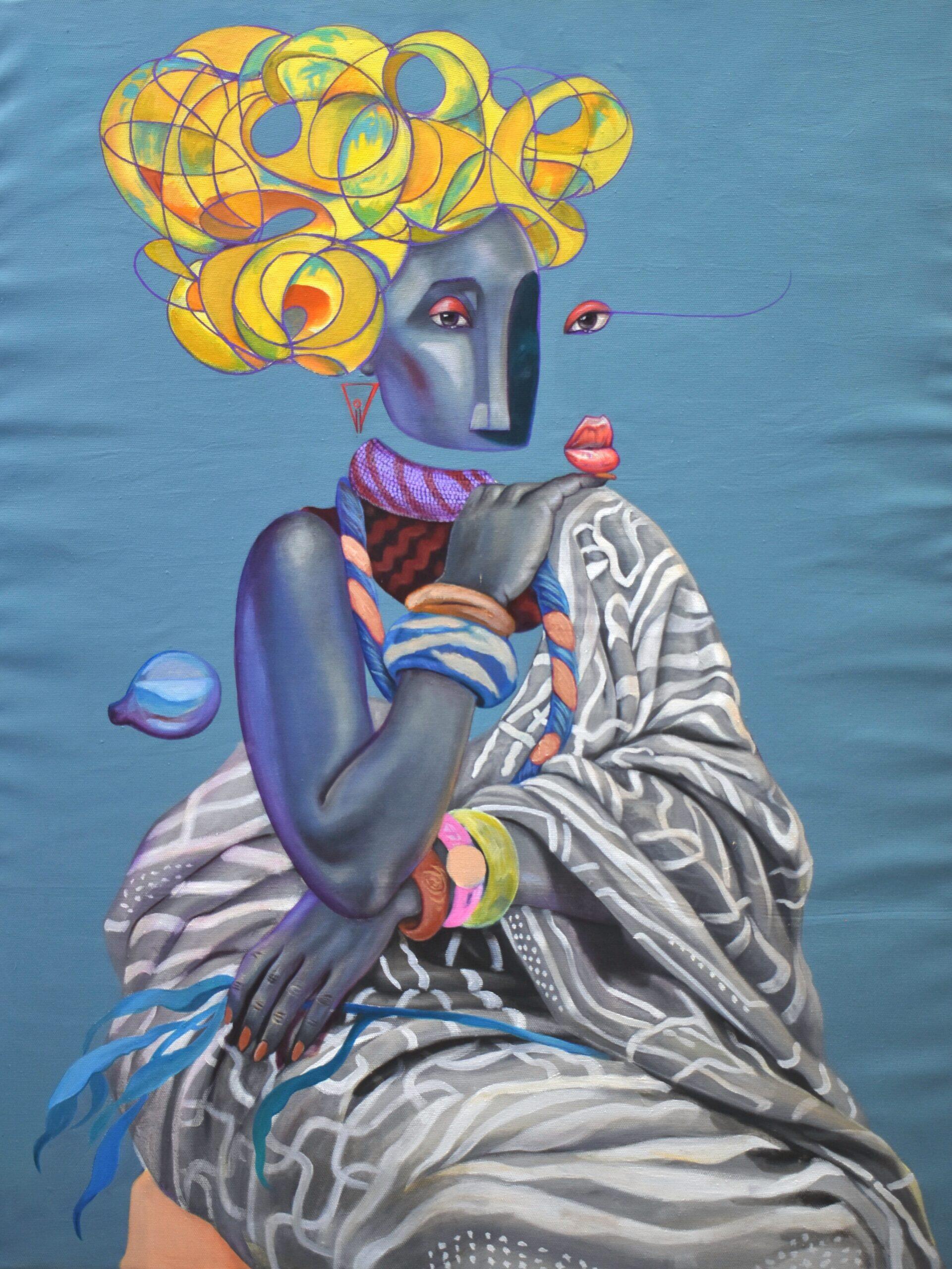
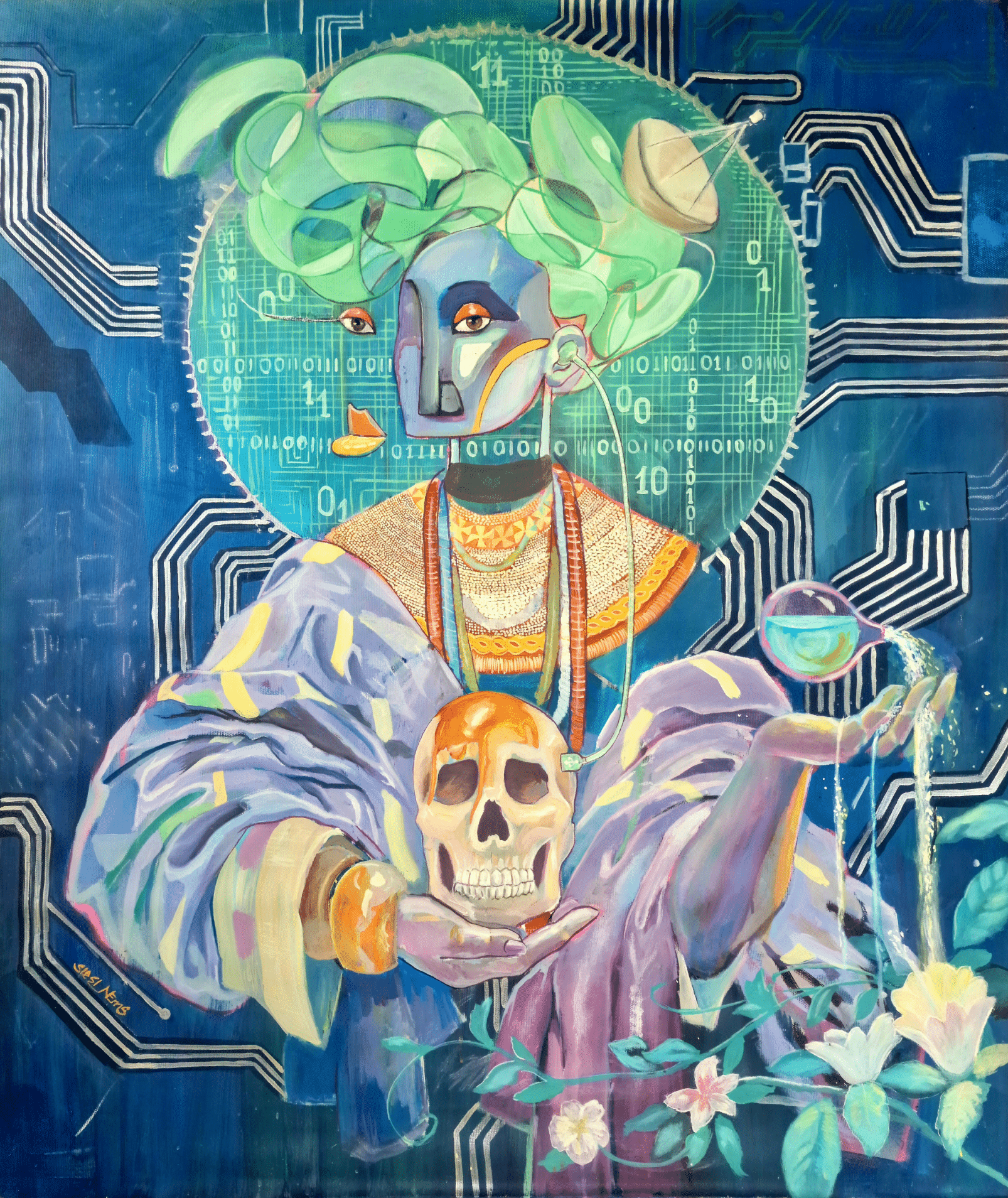
From this philosophy, Siêsi developed his own artistic language, Nûfi Fô, inspired by African masks and, importantly, their function. For him, a mask’s significance extends beyond its appearance to the role it plays within a community—as protector, purifier, bearer of identity or spiritual intermediary.
This principle informs his striking visual vocabulary. His figures can appear surreal or cubist, their anatomy fragmented and reconstructed through geometry. Two features carry particular meaning: the eye and the mouth. The eye evokes the ability to perceive beyond appearances—a metaphor for awareness, insight, and another way of seeing the world. The mouth represents communication and the power to voice what others may be unable or unwilling to express.
In Siêsi’s world, anatomy becomes language.
Beauty beyond convention
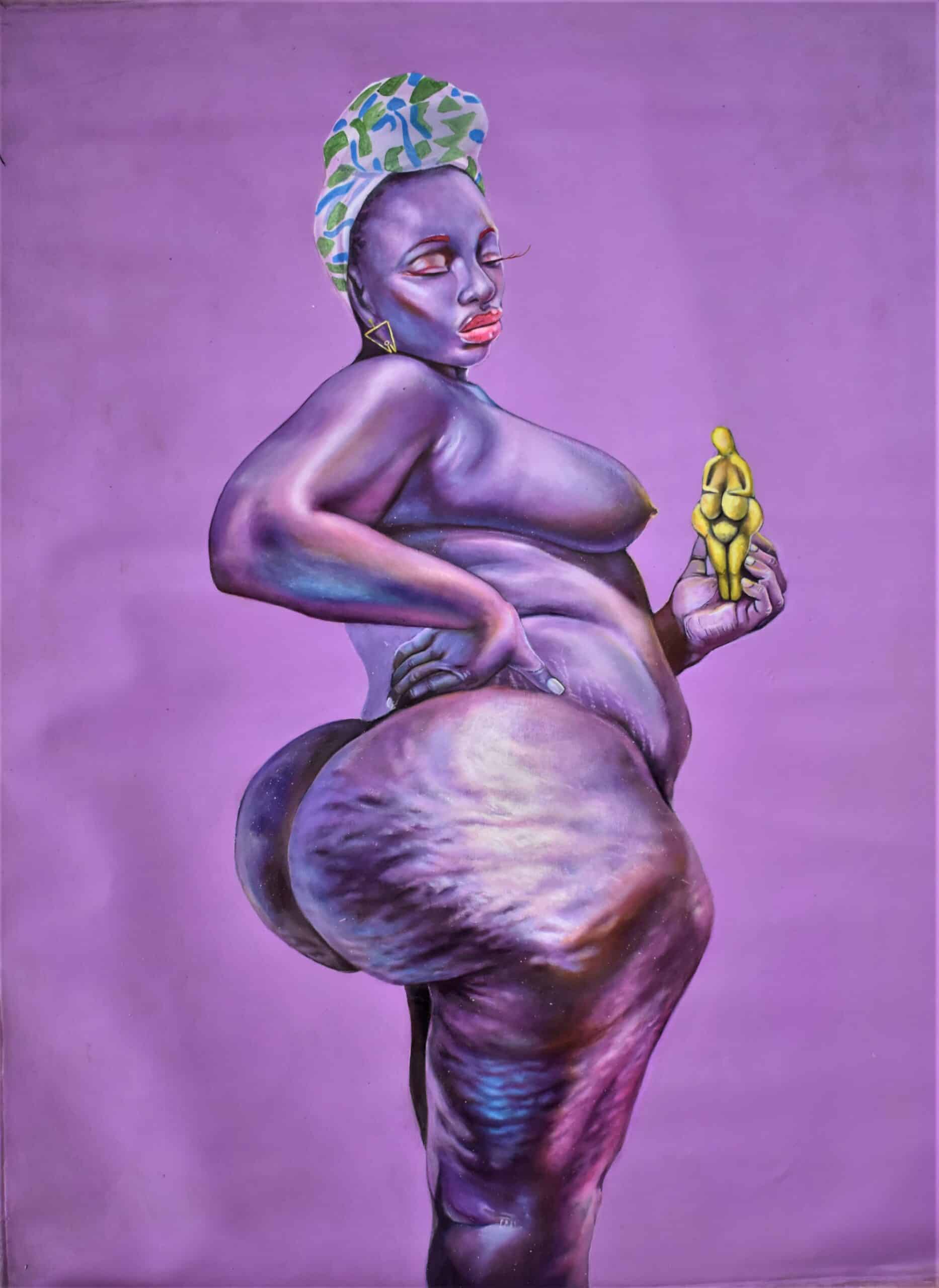
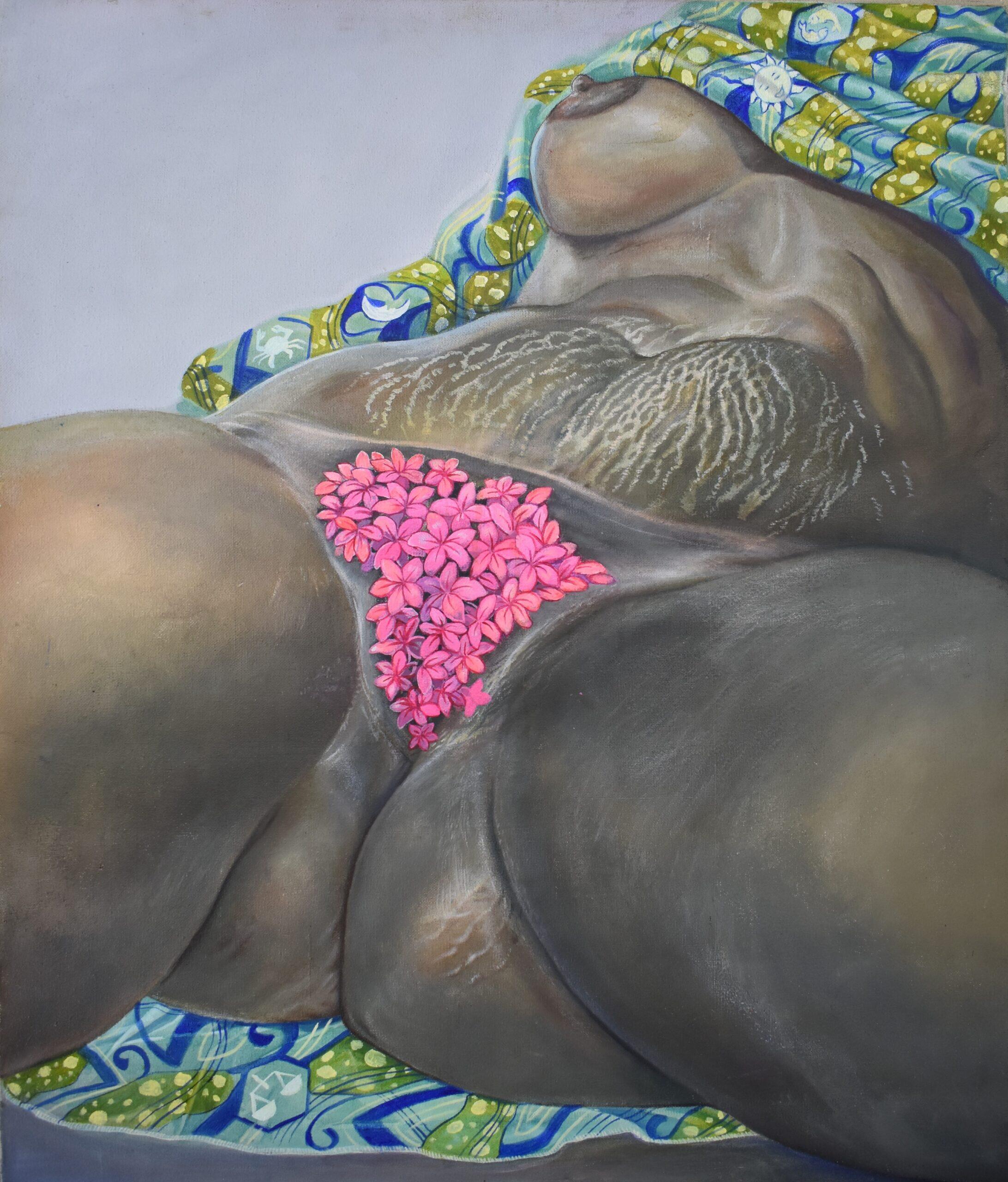
The African woman is another central presence in Siêsi’s work. Rather than conforming to a single ideal, he celebrates beauty in its many forms, embracing features that one person might call imperfections and another might recognize as beautiful.
His female figures also embody transmission. Drawing from Bamiléké culture, Siêsi presents women as intergenerational guardians of culture, values and virtues, carrying knowledge and identity from one generation to the next.
Resurrecting what should not disappear
Ultimately, Siêsi seeks to resurrect ancestral values and cultural principles without simply reproducing the past. Through Nûfi Fô, he brings that inheritance into the present, inviting viewers to reconnect with themselves and recognize the value of what has been passed down to them.
My conversation with Siêsi deepened my appreciation for an artistic universe that had fascinated me from the beginning. Behind its extraordinary aesthetic lies a philosophy that is both deeply rooted and resolutely alive.
Siêsi Nems does not simply revisit ancestral culture. He asks what it can still teach us—about beauty, nature, one another, and ourselves.
Thank you so much, Siêsi, for our fascinating and enriching interview. Please keep on captivating us with your art.
To acquire one or more of his superb works, contact him here: https://www.instagram.com/siesi_nems/?hl=en
Location: Douala (Cameroon)