
Paul Onobiono (A.K.A. Mouono)
Painting the Unseen: Mouono’s Journey Through Memory
Sometimes, what wounds an artist becomes part of the language they use to speak.
When Paul Onobiono—known as Mouono—answered my video call, he was on his way to Exposition sous l’Arbre, an annual gathering of artists in Yaoundé, Cameroon. Preparations for the sixth edition were underway, yet he spoke with an openness and enthusiasm that made our conversation feel anything but rushed.
I had first encountered his paintings online.
They were difficult to forget.
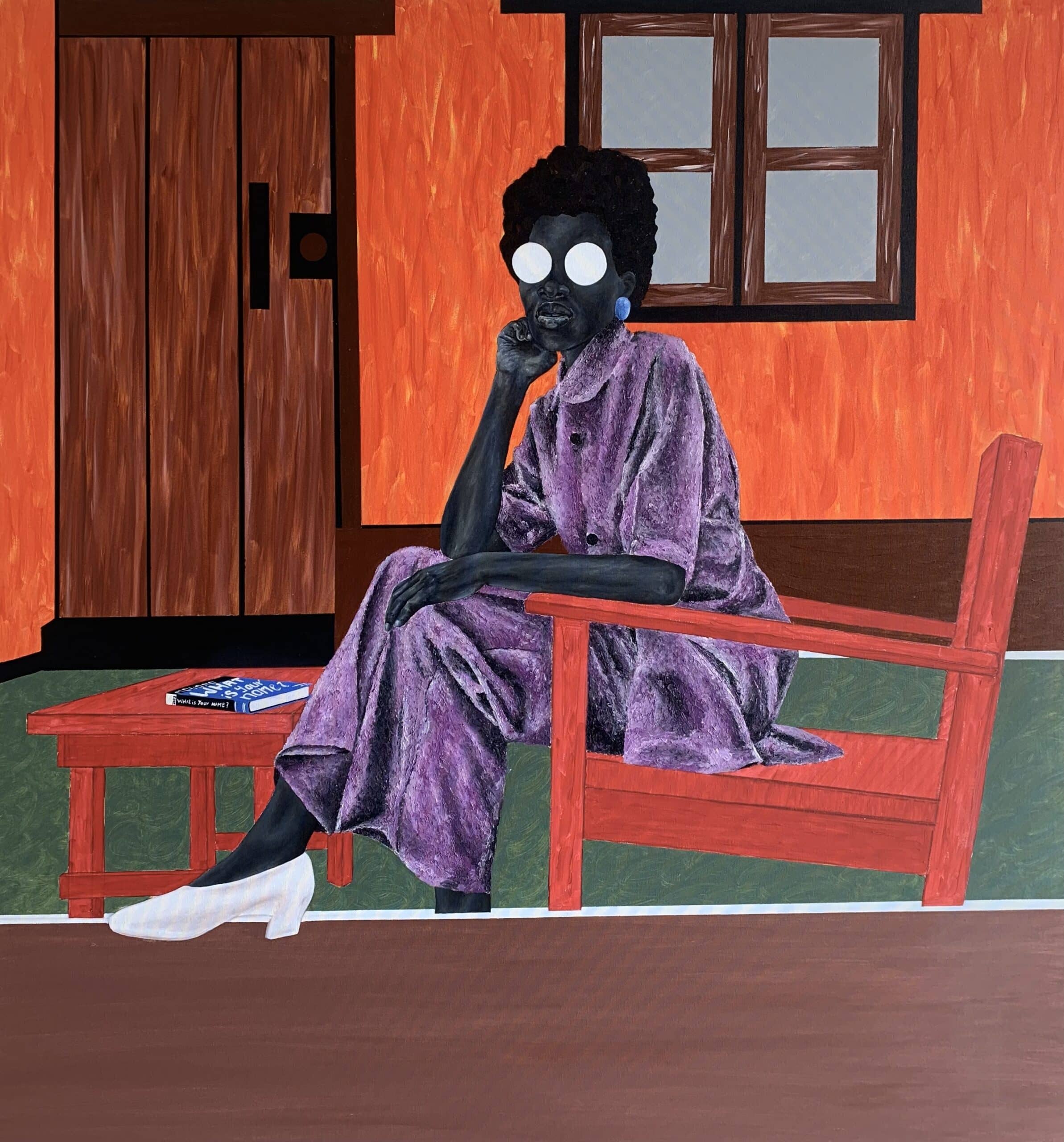
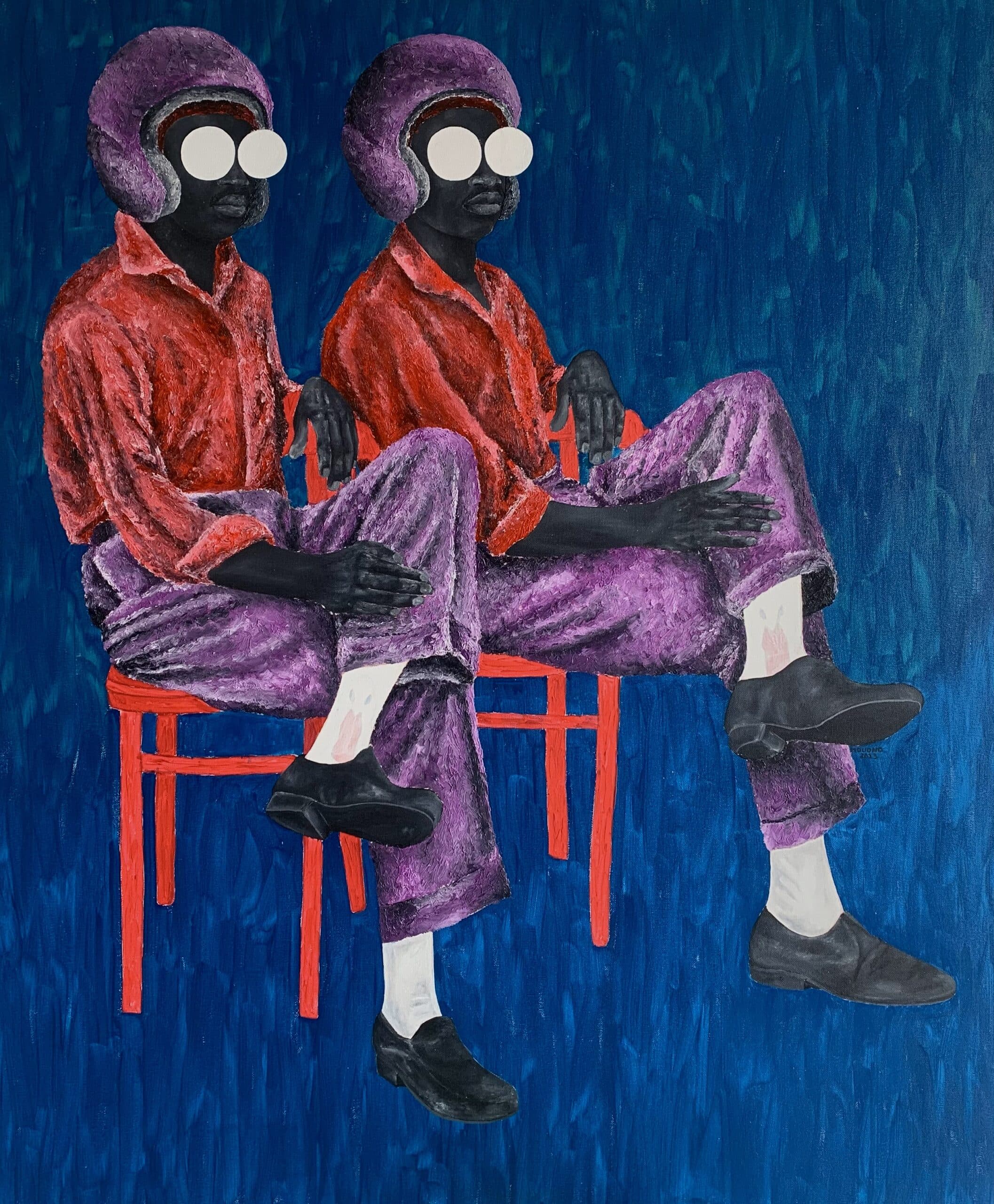
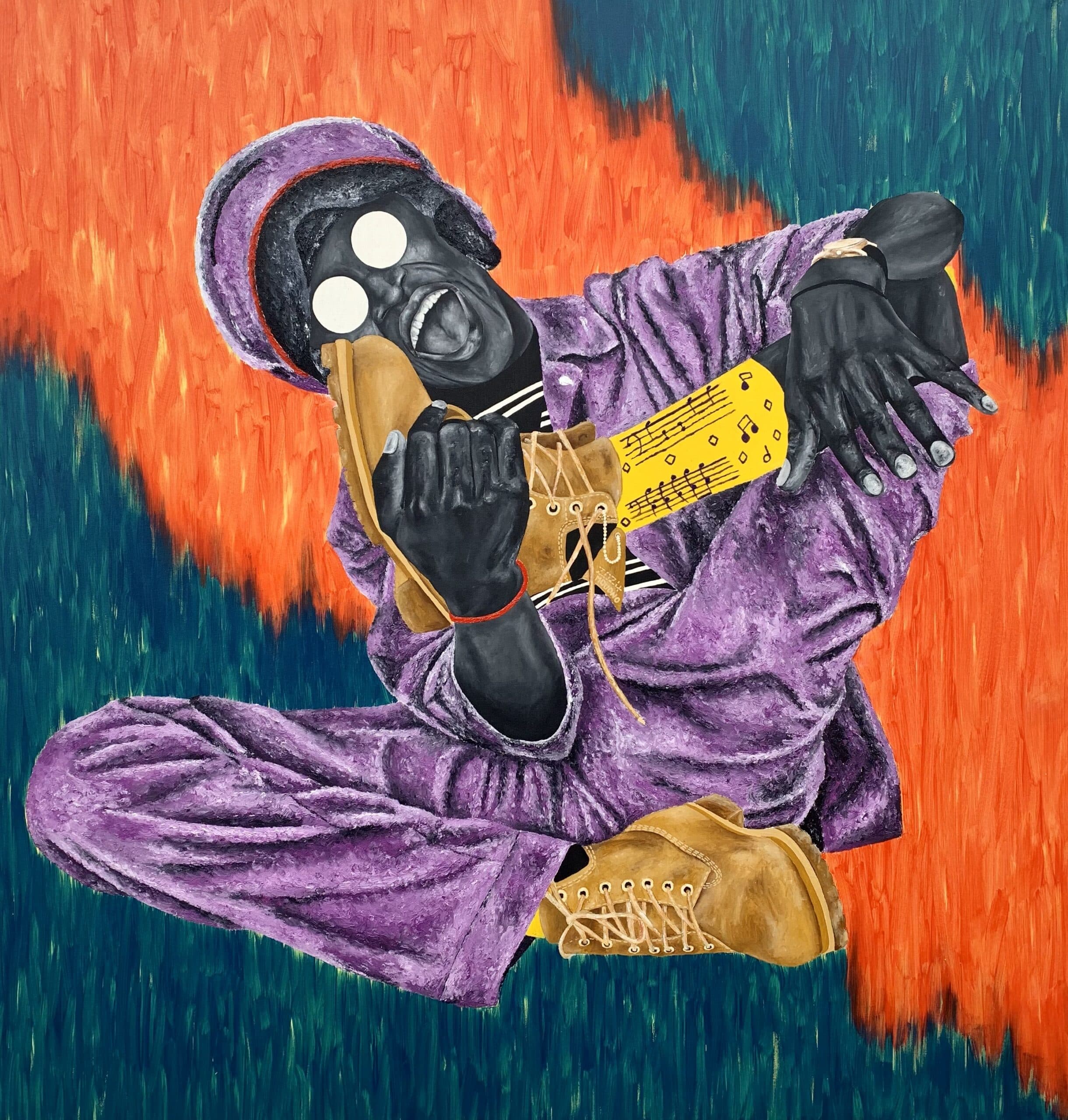
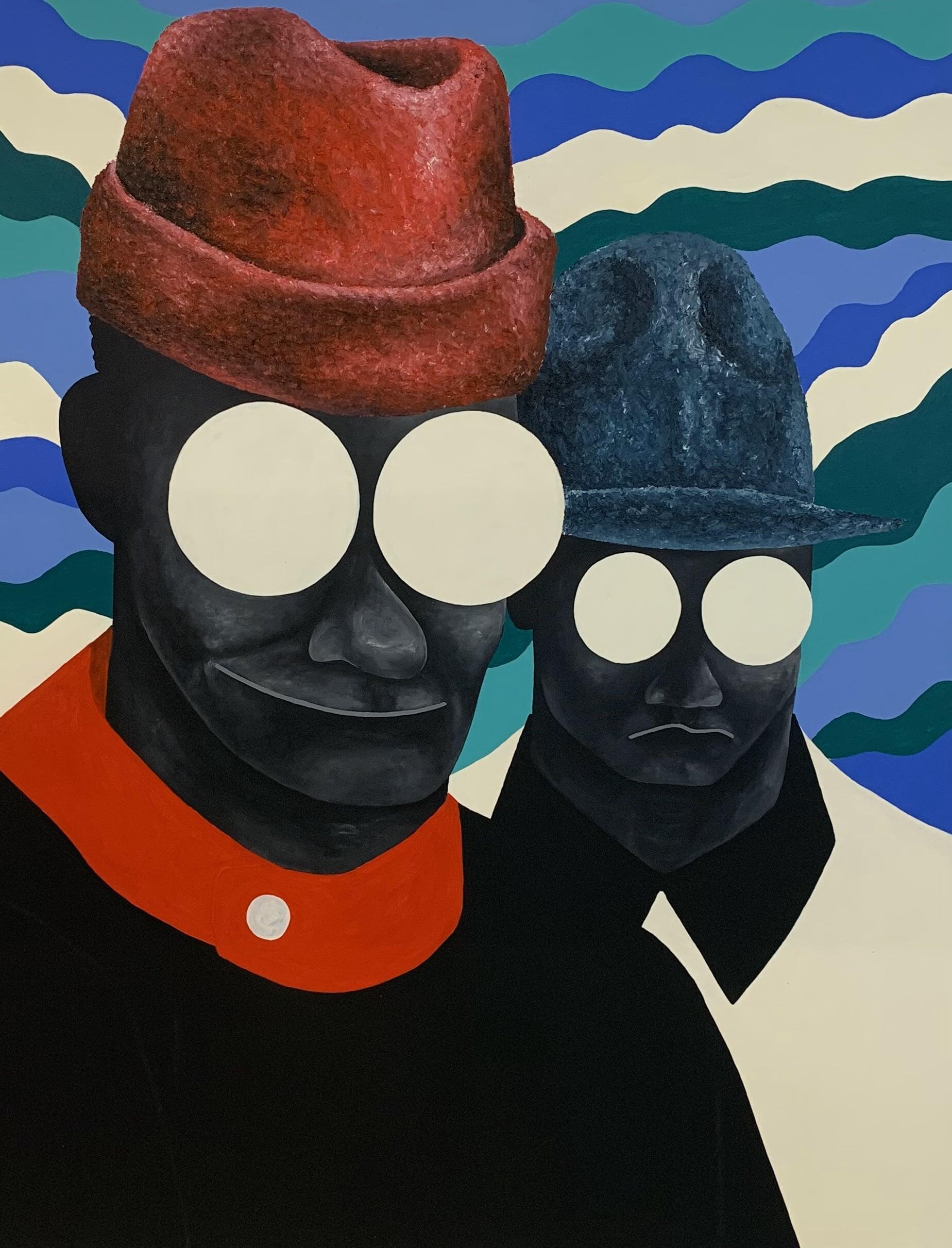
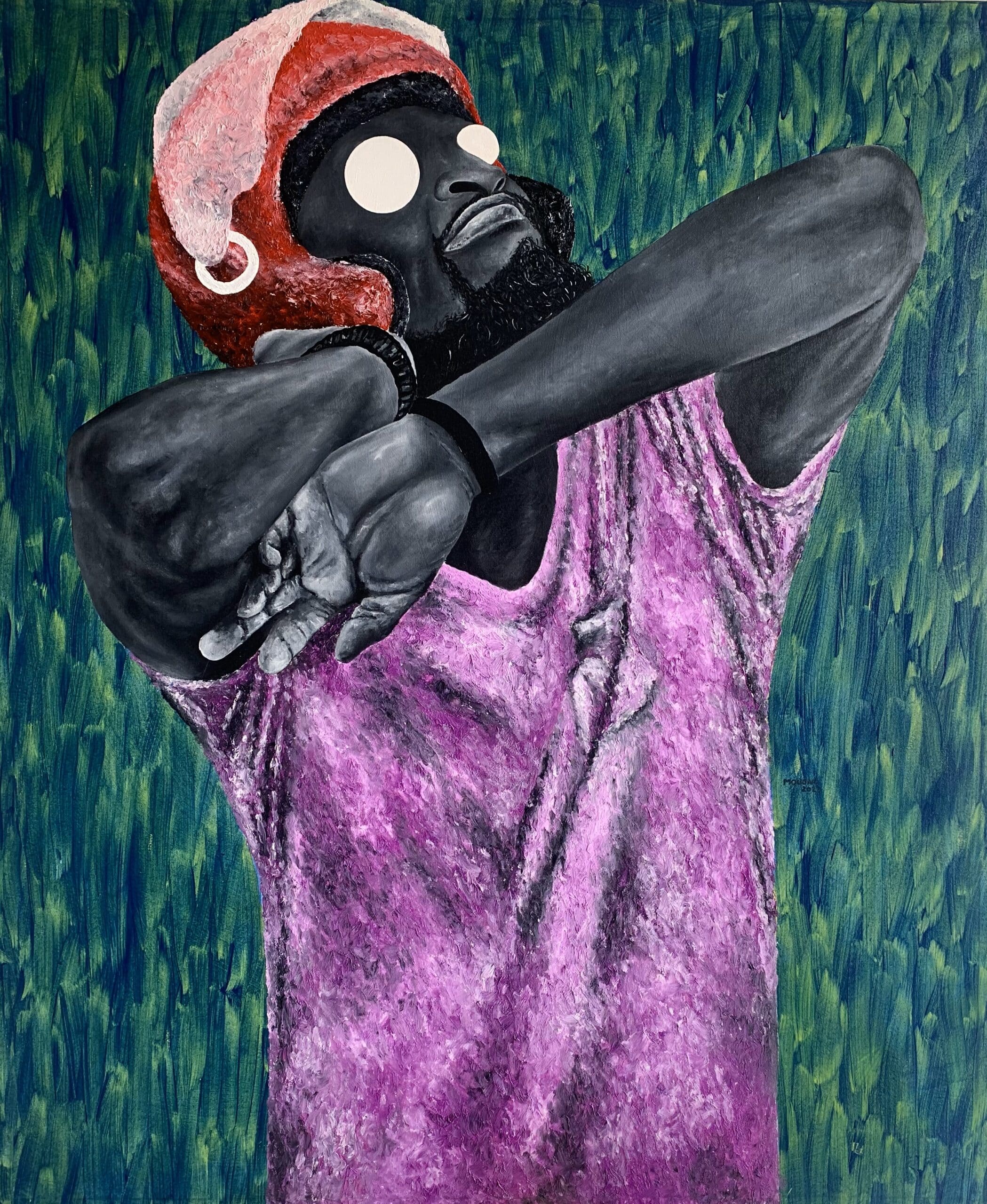
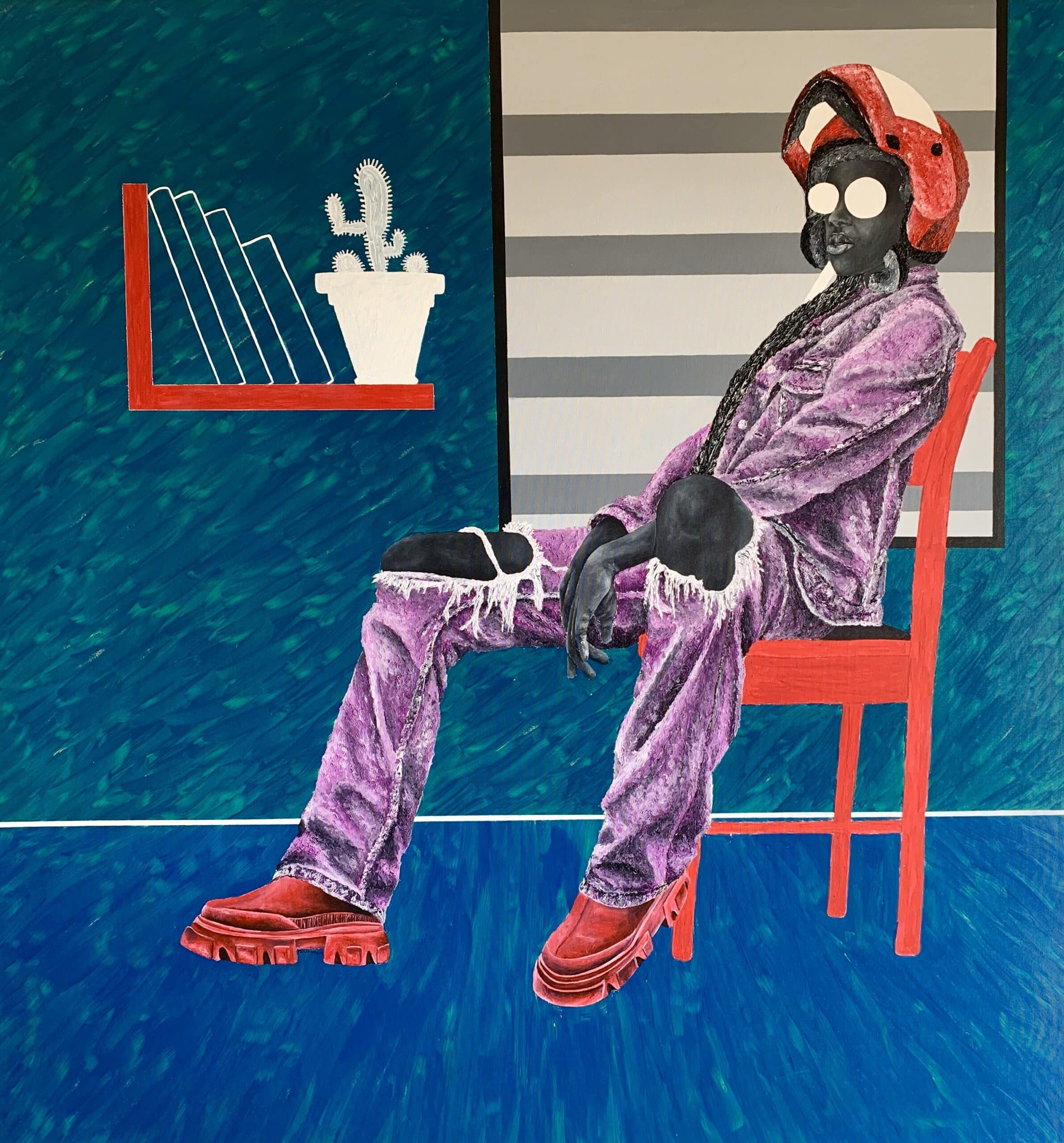
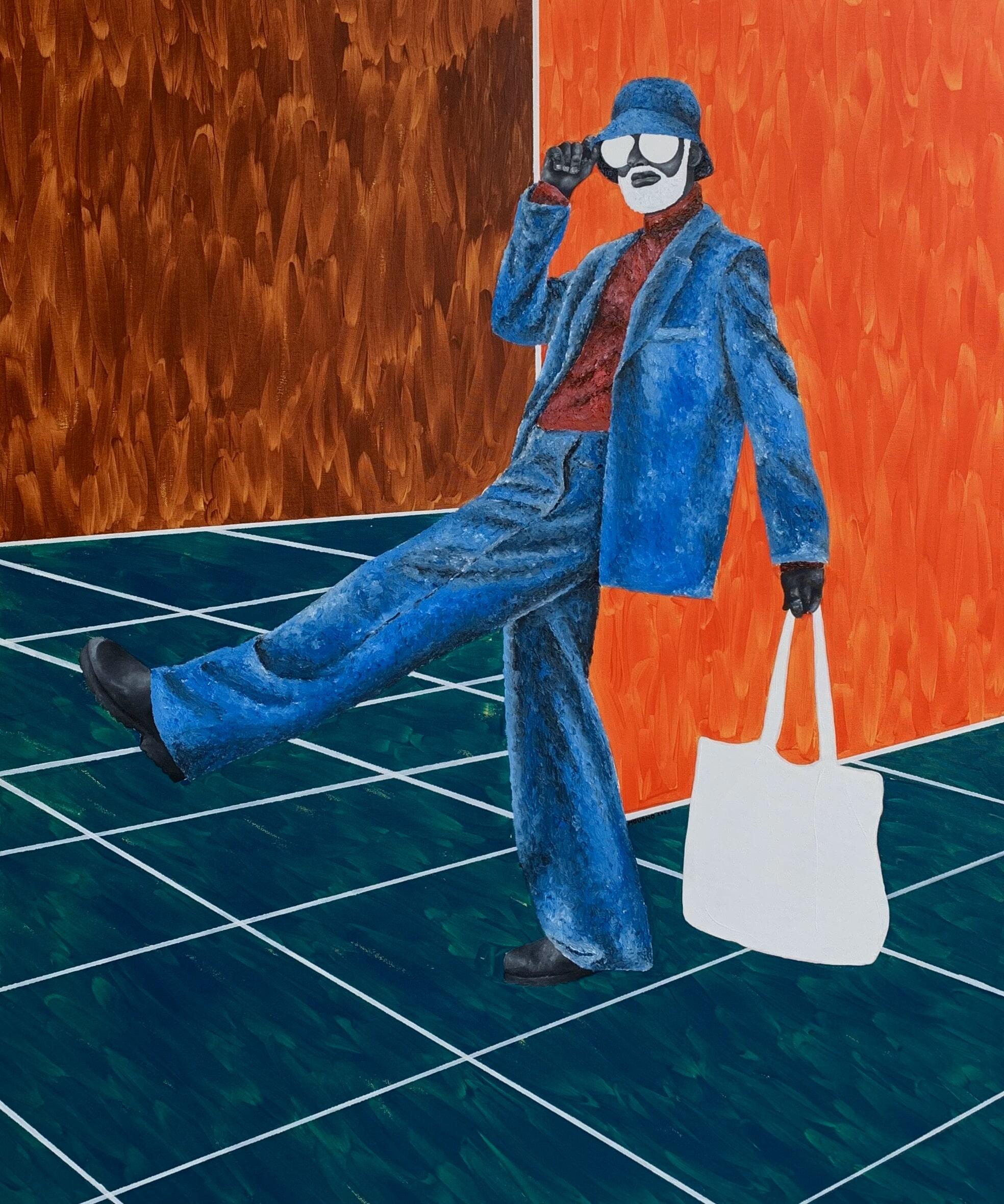
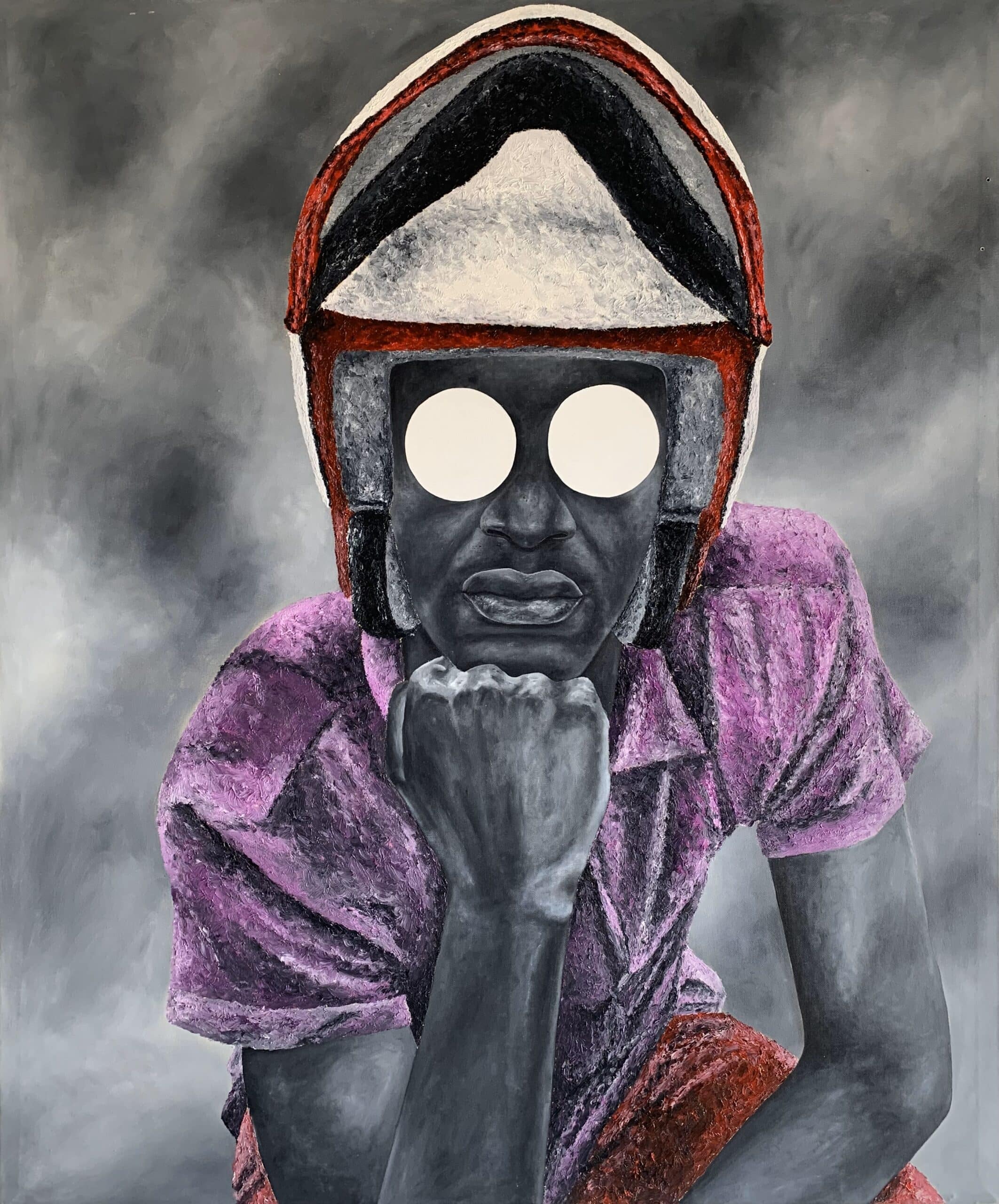
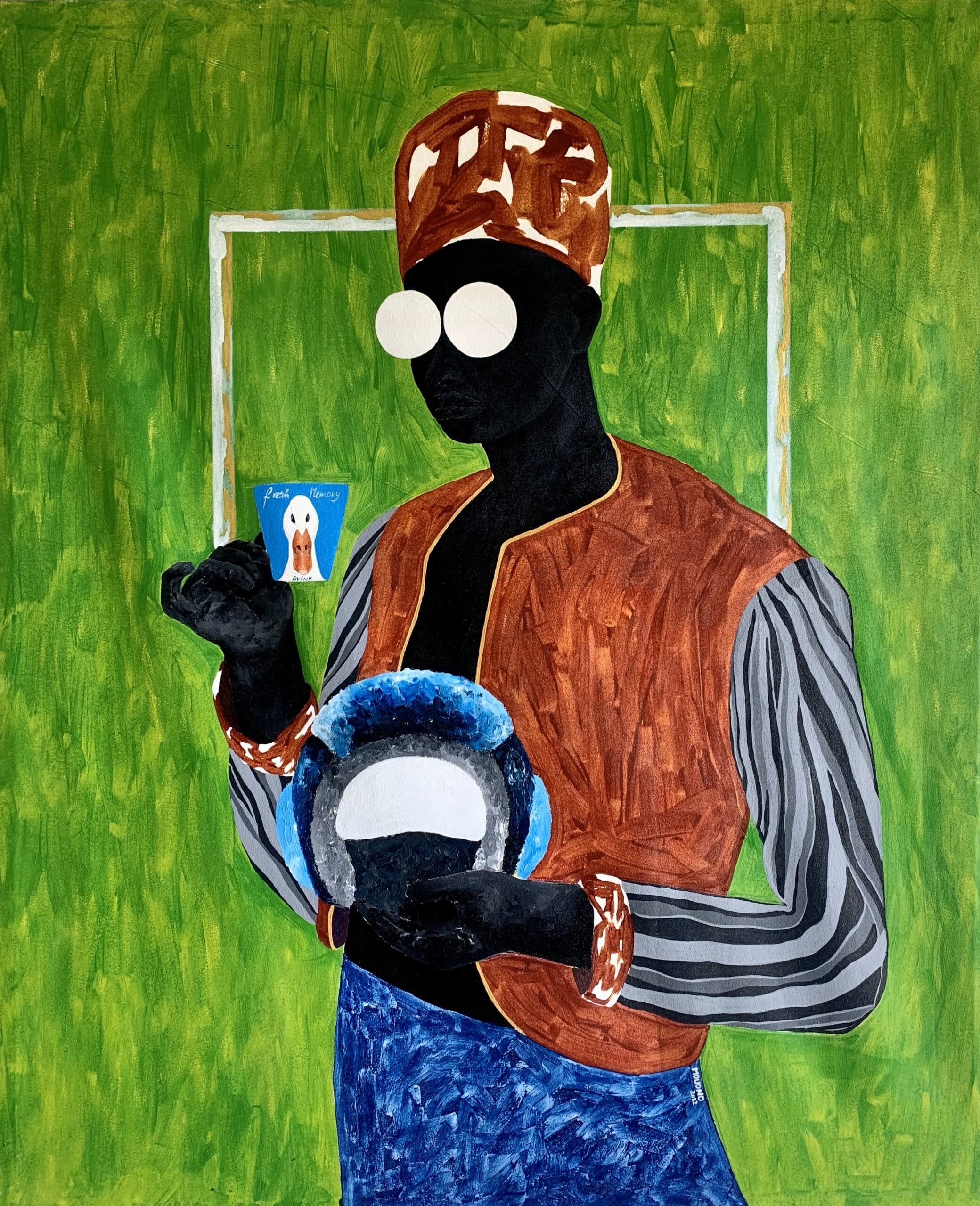
There was something beautifully unsettling about them: elegant figures, mysterious white forms, protective helmets—and faces whose eyes seemed to have disappeared.
And yet, somehow, they still seemed to look at you.
I wanted to understand why.
When the eyes disappeared
The answer took me somewhere I hadn’t expected.
Years earlier, Mouono had experienced the betrayal of someone close to him. The experience affected him so deeply that, for a time, he could no longer paint.
Eventually, he returned to the canvas.
But something had changed.
The faces he painted were blank.
It was as though, through painting, he was attempting to erase the person who had hurt him from his memory.
Slowly, the human features began to return.
The eyes did not.
In their place appeared the luminous white forms that would become one of the most recognizable elements of Mouono’s visual language.
Something born from pain had evolved into something else entirely.
A scar became a symbol.
An absence became a presence.
And an experience that had once silenced him ultimately helped him discover a language of his own.
Finding his own way to paint
Born in 1996 in Bikok, in Cameroon’s Méfou-et-Akono department, Mouono had been drawn to art since childhood.
After earning his A4 baccalaureate in 2014, he studied Fine Arts and Art History at the University of Yaoundé, graduating in 2017. Rather than follow a more conventional path, he committed himself fully to painting.
But finding his artistic voice took experimentation.
His earliest drawings included cartoon characters. As his ambitions grew, however, he began searching for something that felt more personal. Traditional approaches increasingly seemed insufficient for what he wanted to express.
So he experimented.
Eventually, even something as ordinary as a teaspoon found its way into his practice as a painting tool.
It says something important about Mouono’s work: convention matters less to him than finding the means necessary to make an idea visible.
Early in his development, he found technical inspiration in Cameroonian artist Salifou Lindou. Over time, however, Mouono built a vocabulary unmistakably his own.
Working in oil and acrylic and drawing from both his own photography and collected imagery, he creates figures suspended somewhere between stillness and vitality, familiarity and mystery.
Protecting what time can erase
Behind those figures lies a larger concern: memory.
For Mouono, memory is fragile, but indispensable.
It connects who we were to who we are—and eventually to those who come after us.
That idea helps explain the recurring symbols throughout his paintings.
The helmets worn by some of his figures can become forms of protection: vessels safeguarding human histories and experiences.
The absent eyes push the idea further.
We inherit memories of things we never witnessed. Stories move from parents to children, from communities to generations. Identity itself can carry traces of lives that preceded our own.
And so Mouono’s paintings begin asking questions that extend far beyond the canvas:
Who am I because of where I come from?
How have culture, ancestry and belief shaped the person I have become?
How much of my identity belongs only to me—and how much has been carried forward from those who came before?
What will remain of us in the memories of those who come next?
His figures may have no conventional gaze, but perhaps that is precisely why they invite us to look inward.
Turning what hurts us into something that speaks
There is something particularly moving about Mouono’s journey.
The absence that distinguishes his paintings today wasn’t conceived as a stylistic trick.
It emerged from an experience that temporarily took painting away from him.
He could have stopped there.
Instead, he returned.
And gradually, the very mark left by that difficult experience became part of what makes his work unmistakably his.
Mouono once told me:
“As an artist, you have to take yourself seriously to be taken seriously.”
His paintings give those words weight.
They speak of an artist willing to experiment, question, remember—and transform.
Perhaps that is one of art’s quiet powers.
We cannot always choose what happens to us.
But sometimes, we can choose what we create from it.
🎨 Discover Mouono’s work here and explore paintings where memory, identity, and personal history meet.
Follow Mouono at: https://www.instagram.com/mouono_2/
Location: Yaoundé, Cameroon