Messe B. Rackel
Art Born from Fire: The Unyielding Vision of Messe Bidias
I first came across Messe Bidias through a newspaper article recounting his eventful artistic journey and personal life. His colourful, audacious visual language immediately intrigued me. I went on to find other articles about him, followed his work online, and eventually landed a forty-minute Zoom conversation with the artist himself.
To understand the urgency behind Messe’s work, however, one has to return to Cameroon and a seven-year-old boy fascinated by a drawing.
Where it began
Messe’s first connection with art came during a childhood holiday in his family’s village. His uncle often drew, and one day Messe saw a sketch he had made of boxers Mike Tyson and Evander Holyfield in a ring. The image sparked something. Soon Messe was drawing too, beginning with cartoon characters such as the Teenage Mutant Ninja Turtles and drawing with chalk on his school slate.
Formal artistic training, however, was not available to him. While his sister was able to study art, Messe pursued accounting—yet continued making art, even helping with his sister’s artistic assignments for three years. As a teenager, he created Ziczo art school, voluntarily teaching neighbourhood children to draw and paint. This instinct to share knowledge would remain important throughout his career.
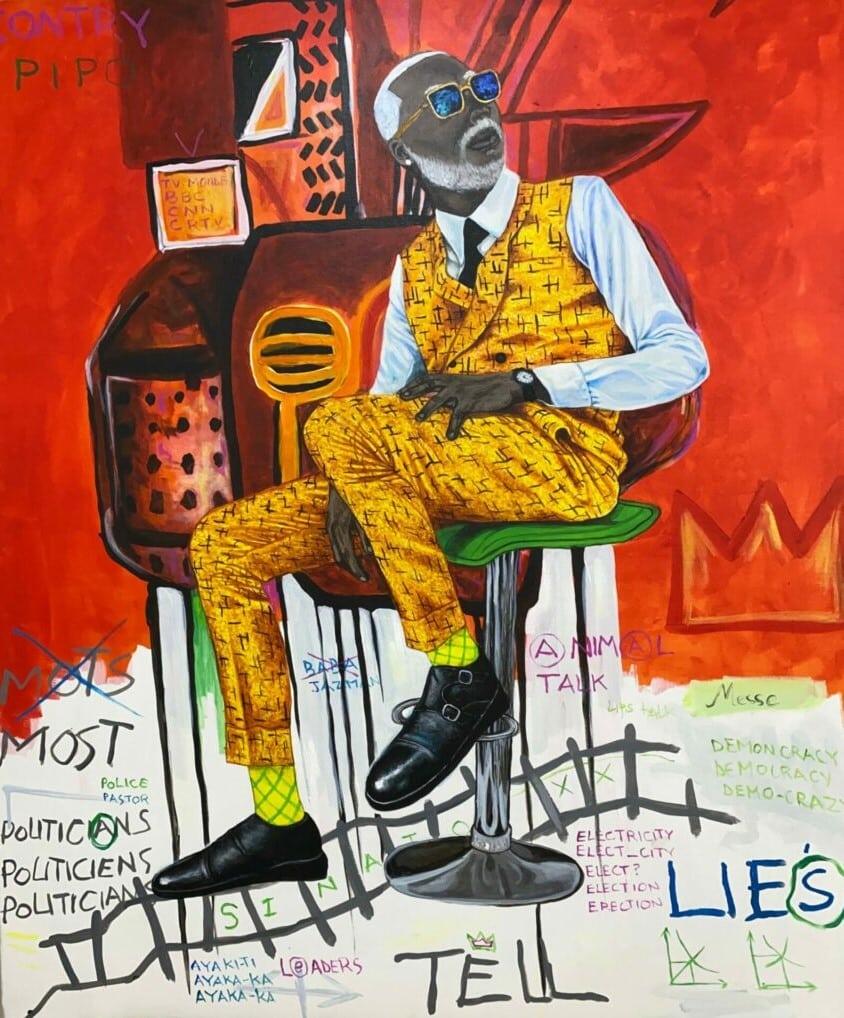
In 2016, Messe committed himself to art full-time. In Cameroon, where he experienced a climate of corruption, inequality and restricted expression, art became both freedom and resistance. His work allowed him to address political dysfunction, social and gender inequalities, religious indoctrination and the suffering of society’s most vulnerable. Works such as Police-ticks, for instance, confront the behaviour of political leaders.
That same year, armed conflict between Anglophone separatists and Cameroon’s national forces erupted in the Southwest region. Messe was forced to flee. Internally displaced, he found himself rebuilding his life with no home and approximately twenty dollars in his pocket. He eventually settled in Yaoundé.
When art became a path to recovery
Another ordeal would profoundly reshape his life.
Messe suffered a stroke that left half of his body partially paralysed. His recovery and rehabilitation lasted approximately two years. During this period, art became an important part of his recovery—a space for expression, focus, and reconnection with his practice. The experience deepened his spirituality and contributed to his evolution as an artist, but it does not define his work. Rather, it forms one chapter in a much broader practice that has continued to expand in both material and meaning.
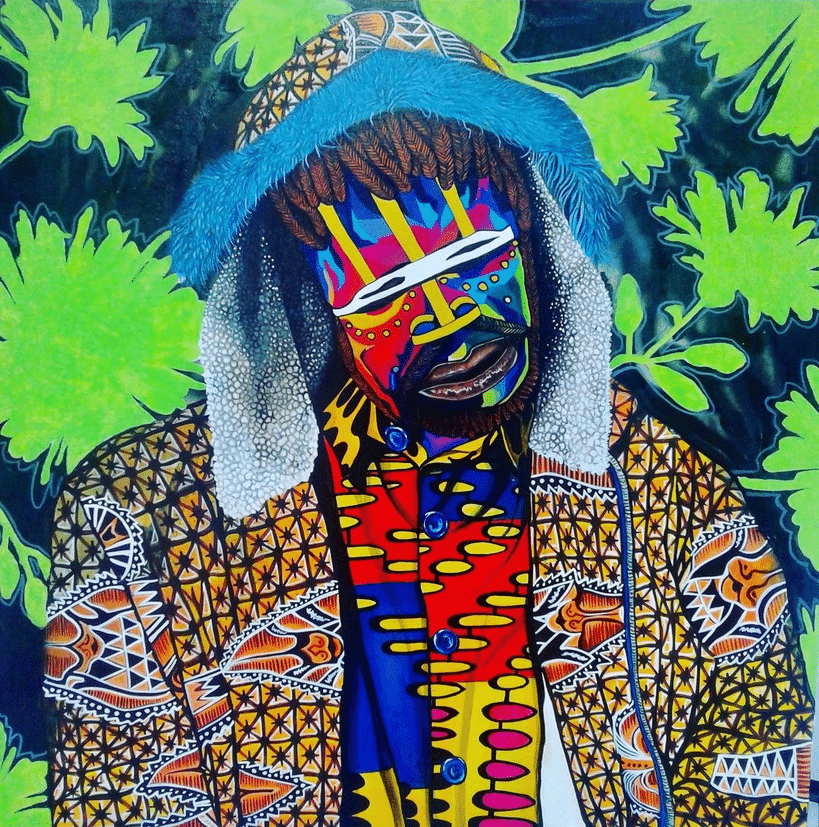
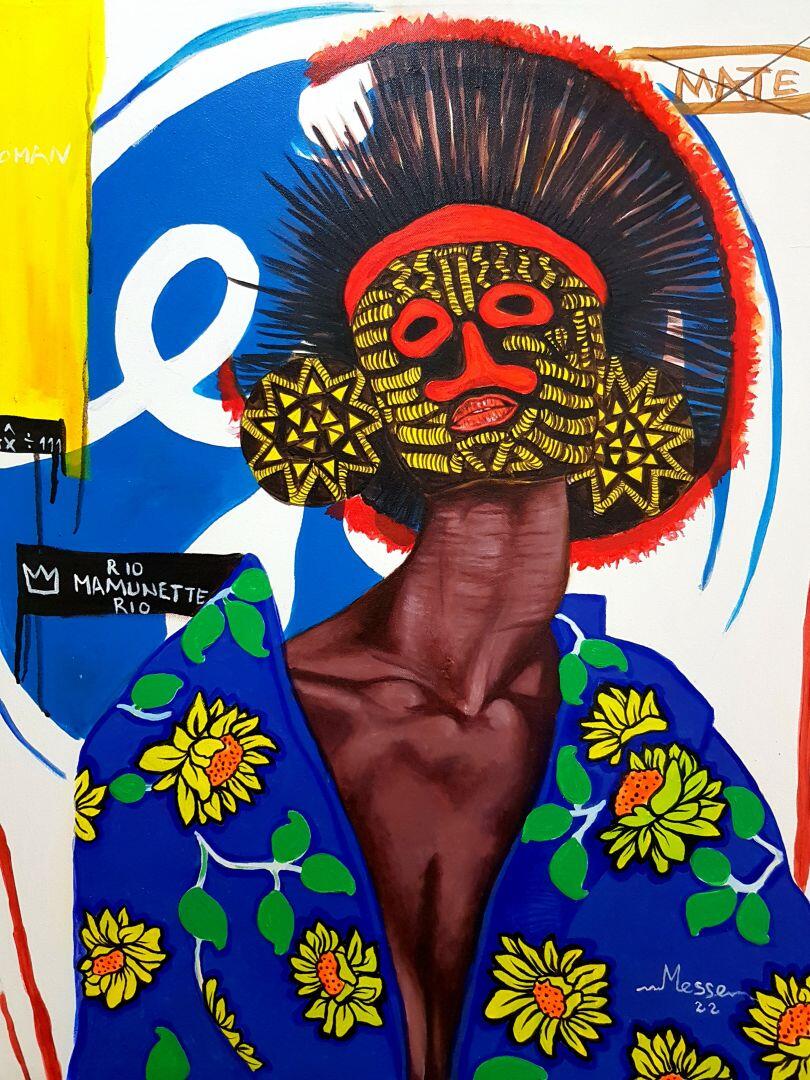
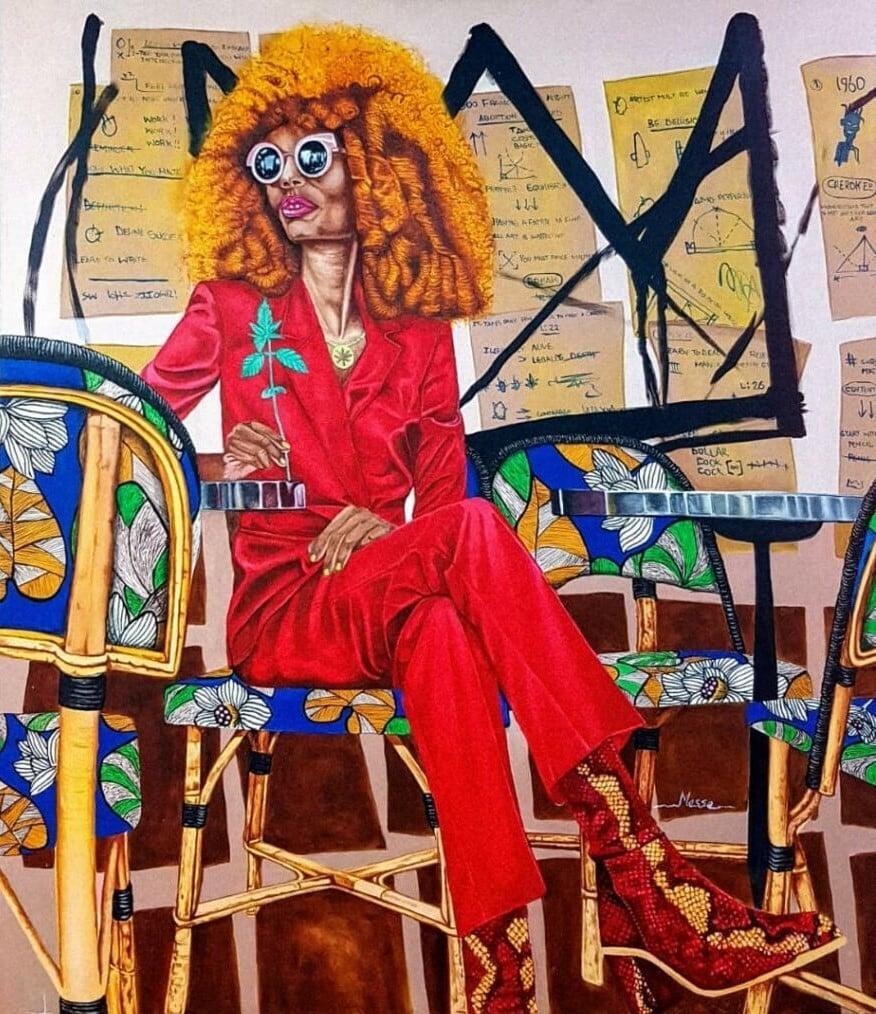
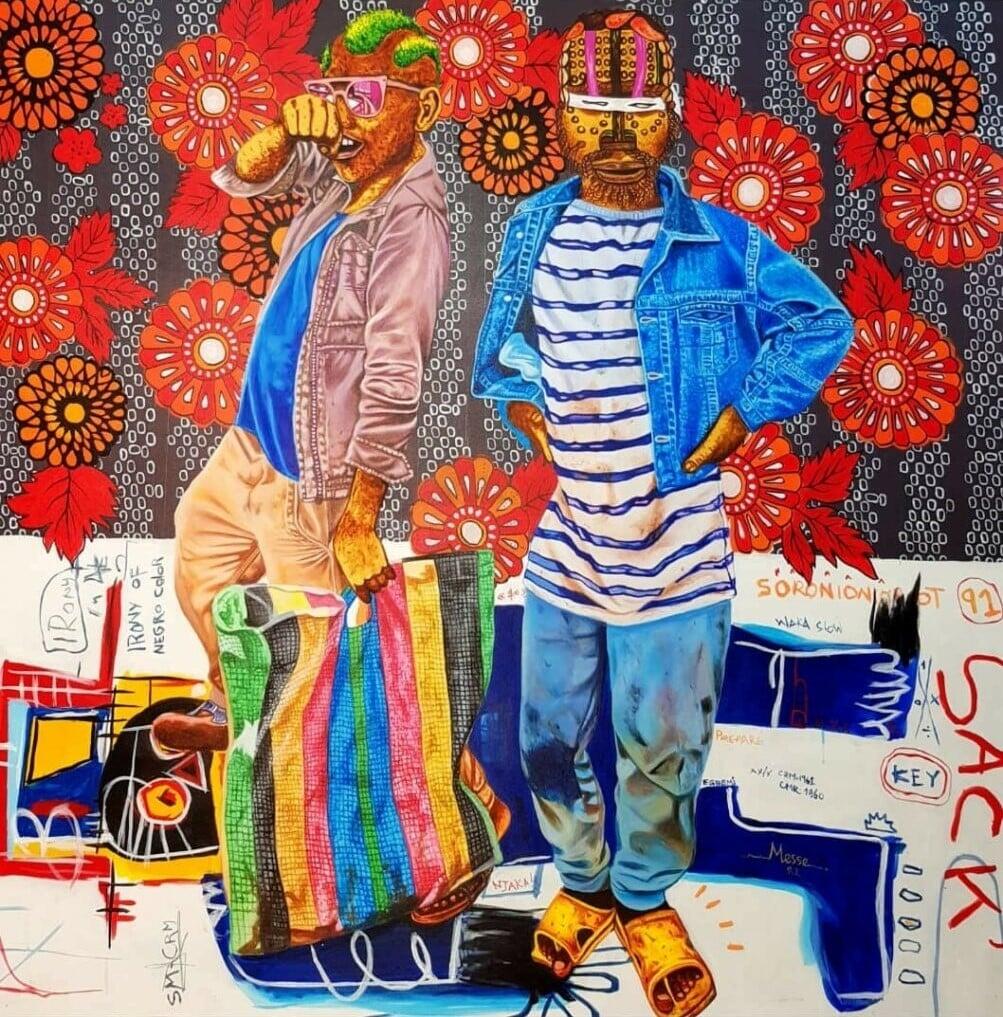
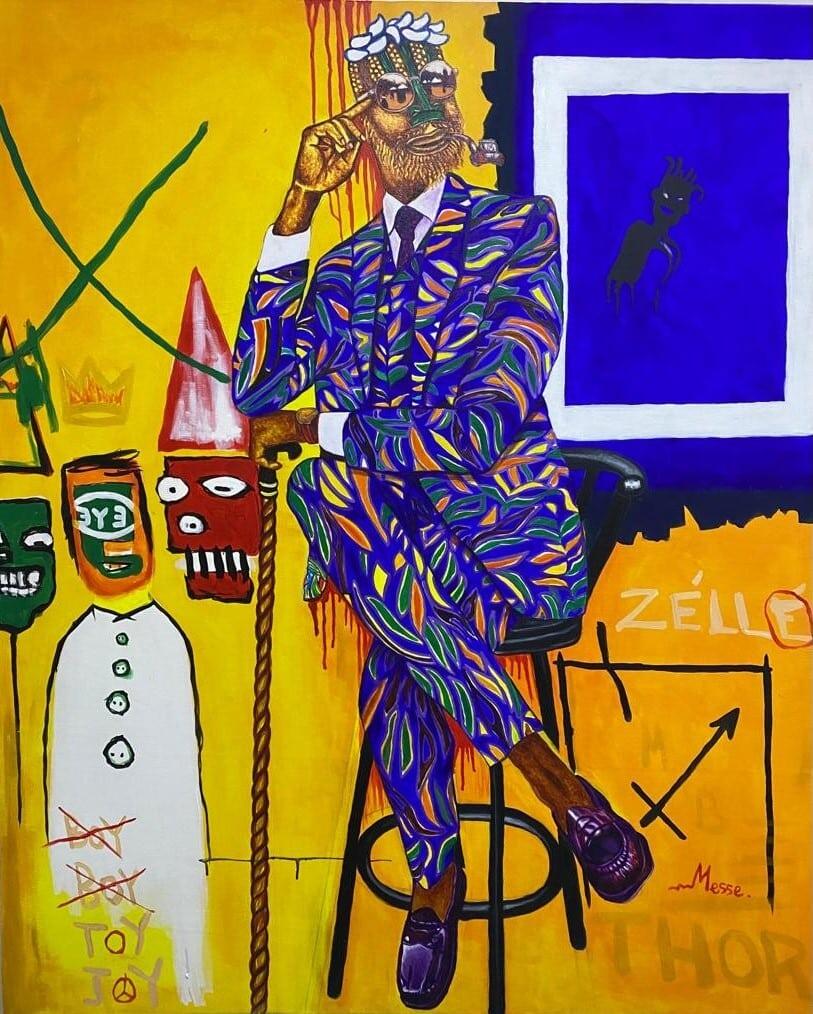
Today, Messe’s artistic language reaches well beyond painting alone. Oil, marble, relief and sculptural elements enter into dialogue with cowries, textiles and references drawn from Cameroonian cultures. These materials allow him to explore surface, volume and symbolism while strengthening the connection between contemporary expression and cultural memory.
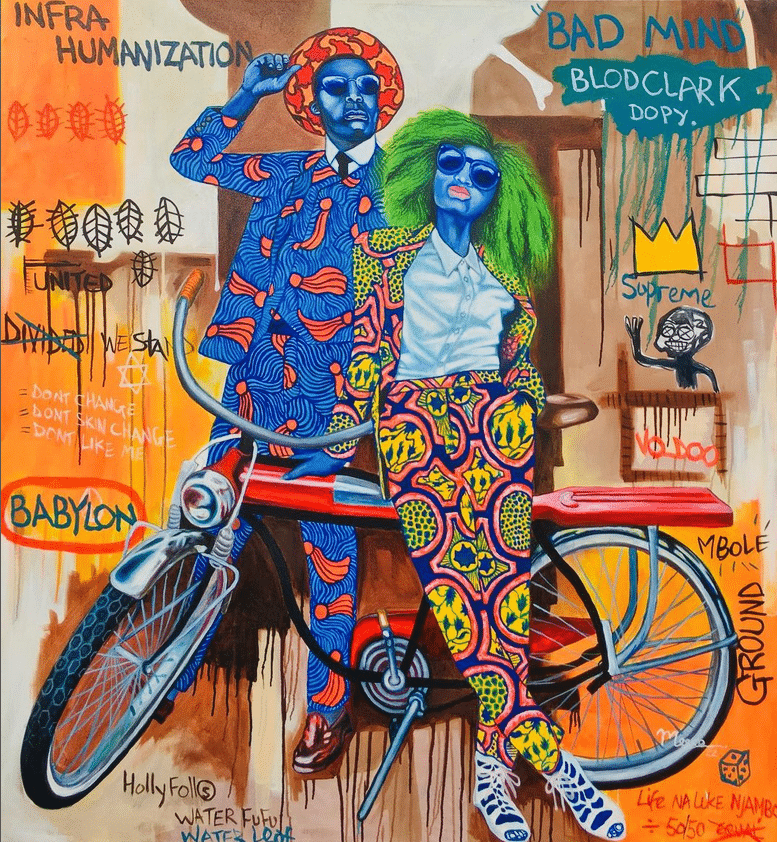
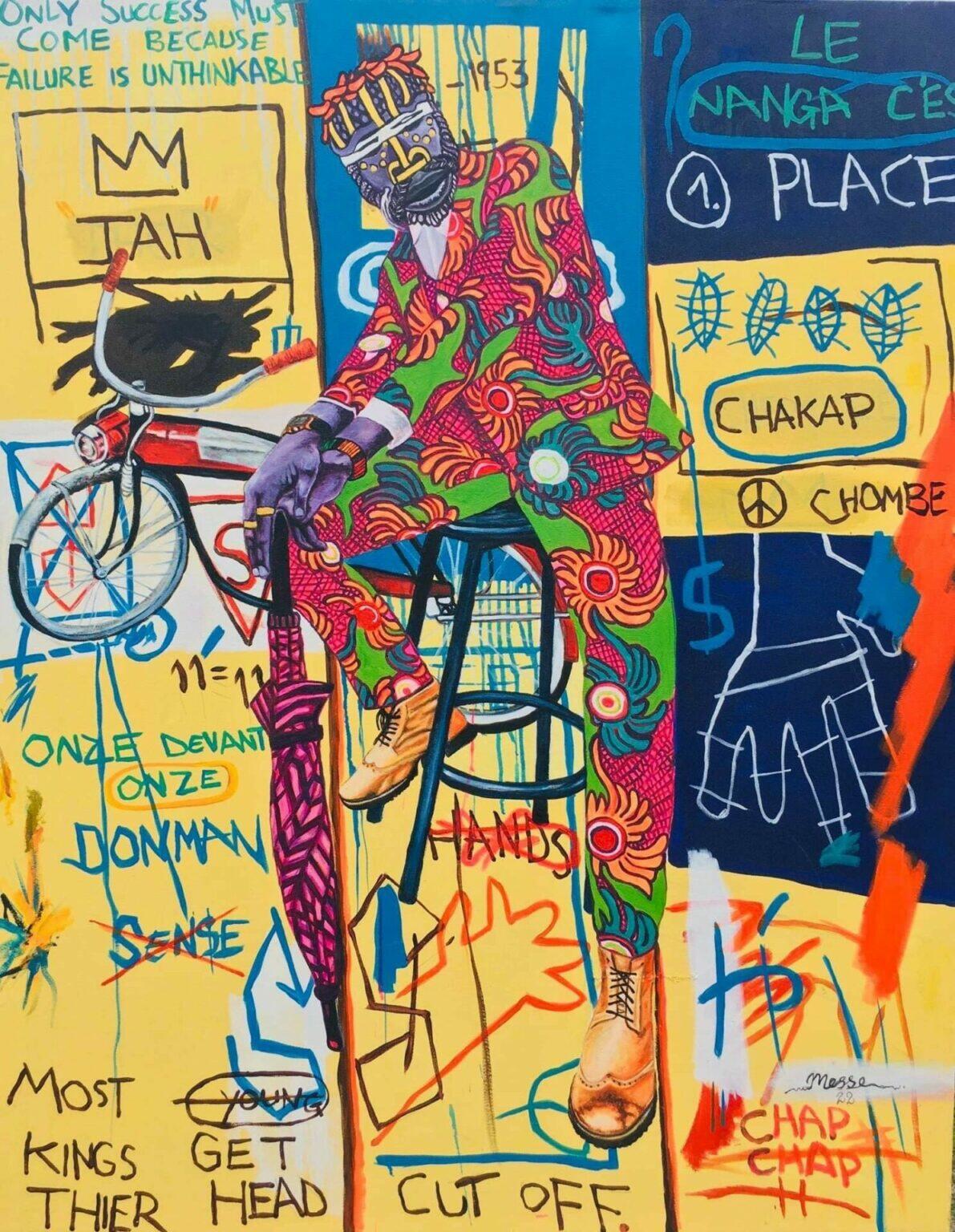
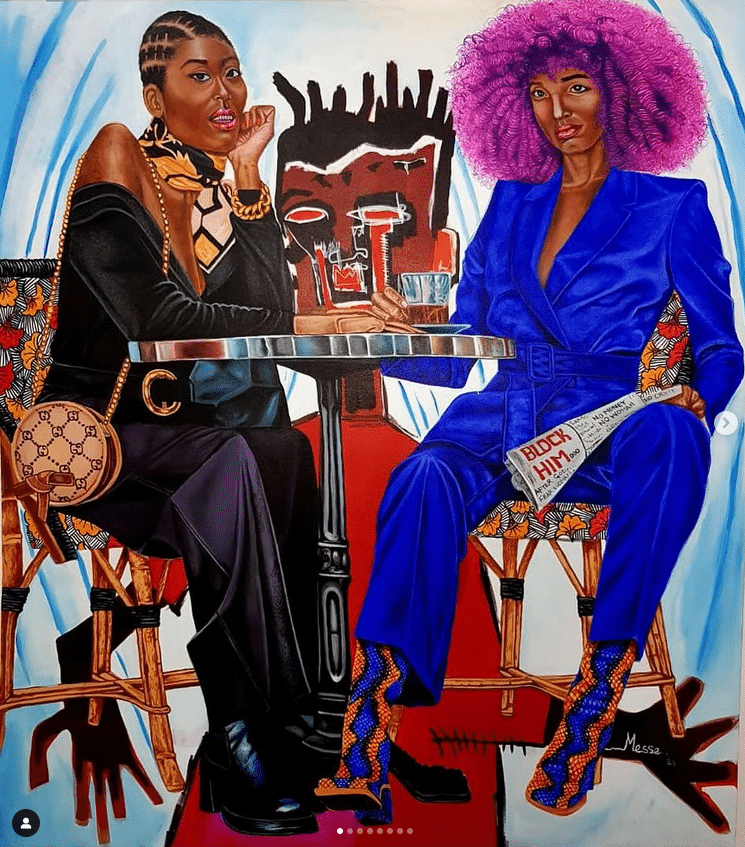
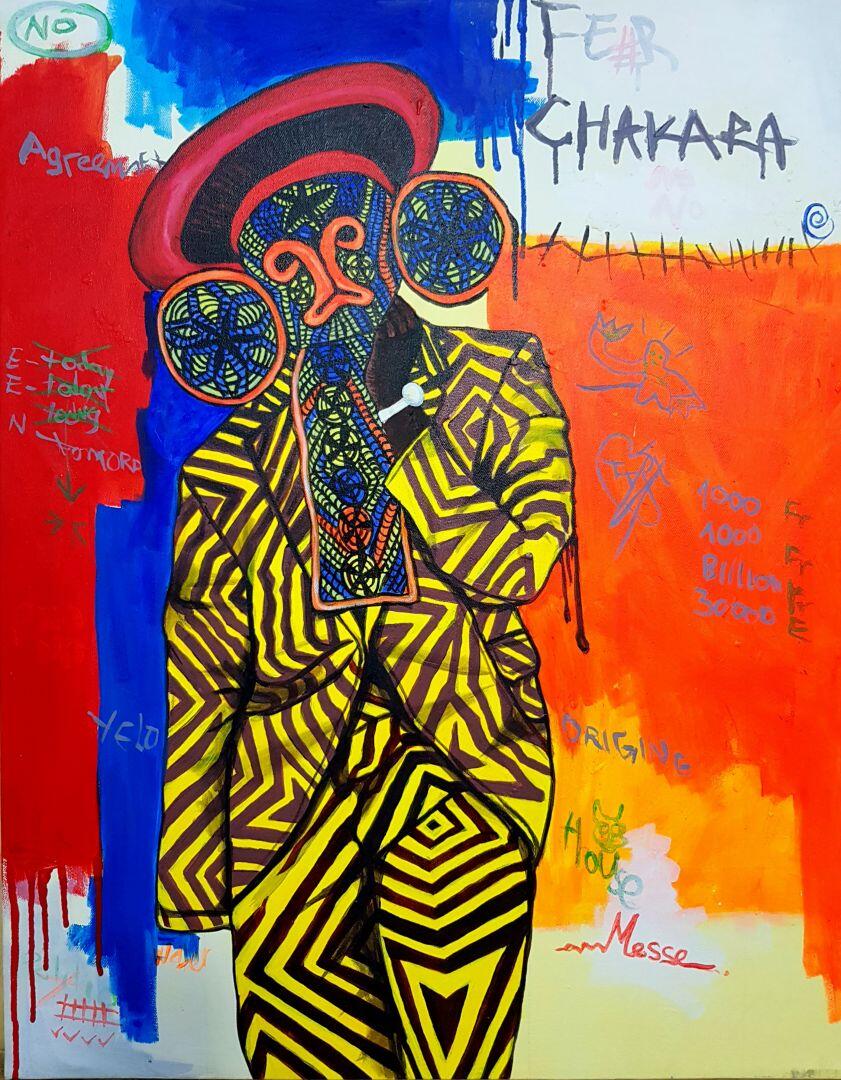
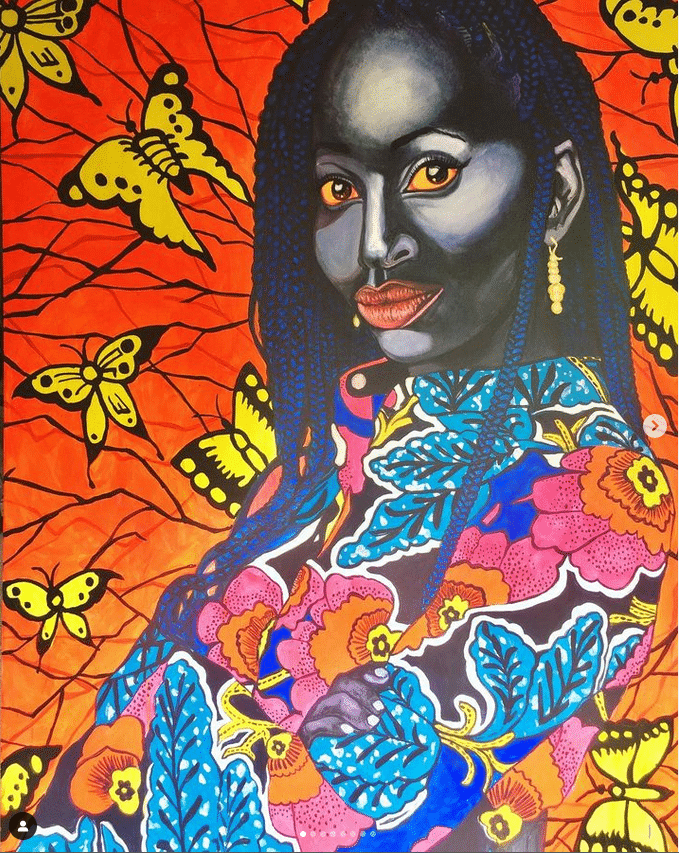
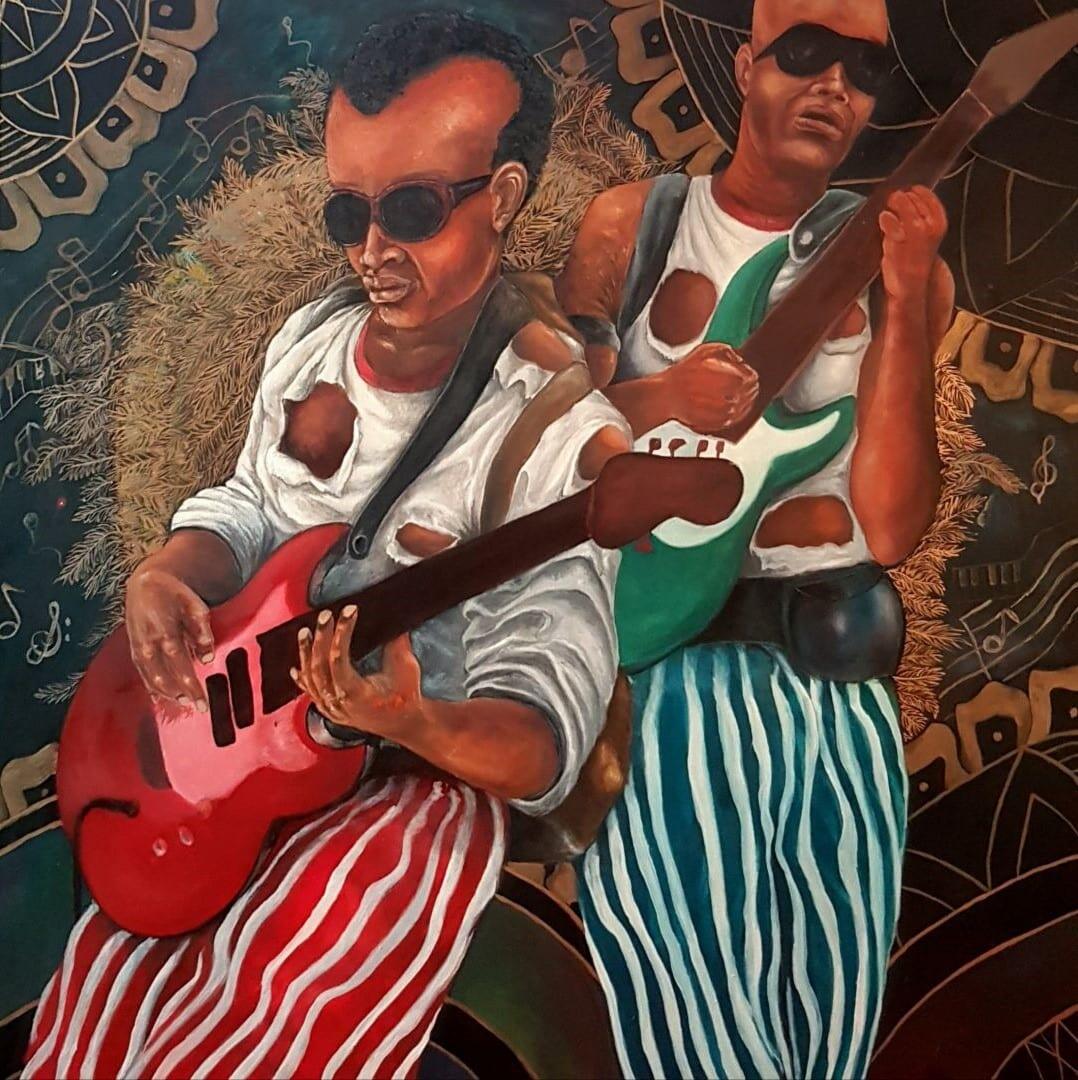
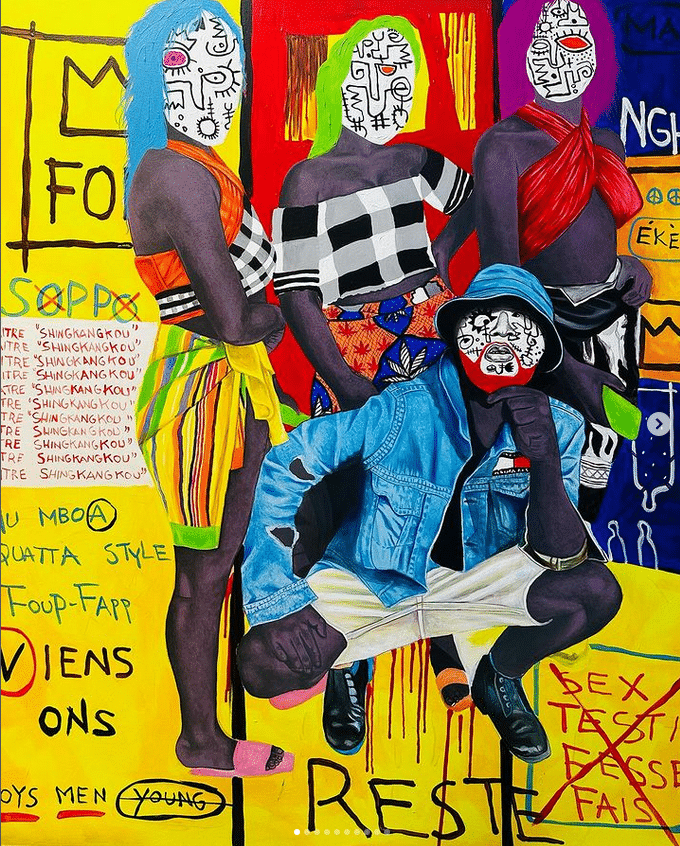
His work remains bold, layered and instinctive. Figures, symbols, abstract forms, fragments of writing, intricate patterns and vivid colours coexist within compositions that move between the personal and the collective. Rather than being confined to a particular Western artistic movement, Messe has developed a language shaped by his own experiences, his Cameroonian heritage and an ongoing exploration of identity, society and the human condition.
His work confronts difficult realities, but it is not defined by them. Messe remains fascinated by human beauty, nature, music and art in all its forms. His practice celebrates the beauty, strength and resilience of African people and the diaspora, creating a dialogue between heritage and contemporary life, struggle and hope, past and future.
Art as a collective endeavour
Messe is equally concerned with the conditions under which African artists create.He has spoken about limited artistic infrastructure and exhibition opportunities in Cameroon, along with the difficulty artists face in earning a living and receiving fair prices for their work. Such conditions can foster intense competition between artists. Messe rejects that mentality.
He believes selfishness ultimately weakens their collective ability to bring beauty into society, speak to the world and advocate for a better future. His own commitment to transmission extends from the Ziczo art school of his adolescence to the free lessons he later gave children in Yaoundé. He has also mentored other artists, including his brothers Elangweh Sesse, now based in Texas, and Bidias Romaric, both of whom have developed their own artistic careers.
Messe Bidias now lives and works in France, in the Geneva region. Yet Cameroon remains deeply present in his artistic language—not as a distant point of origin, but as a living source of memory, material, symbolism and cultural reference.
Freedom as the destination
Messe told me that his dream is ultimately to be free as an artist and leave behind a strong artistic legacy. Perhaps that ambition contains the essence of his practice. Across painting, relief, and sculptural forms, personal experience meets cultural memory, African heritage encounters the present, and difficult realities are transformed into possibilities.
For Messe Bidias, art is not an escape from the world. It is his way of confronting it—and imagining what it could become.
Discover more about Messe Bidias and follow his work:
Website: messebidias.com
Instagram: Messe Bidias on Instagram
Facebook: Messe Bidias on Facebook
Location: France — Geneva region